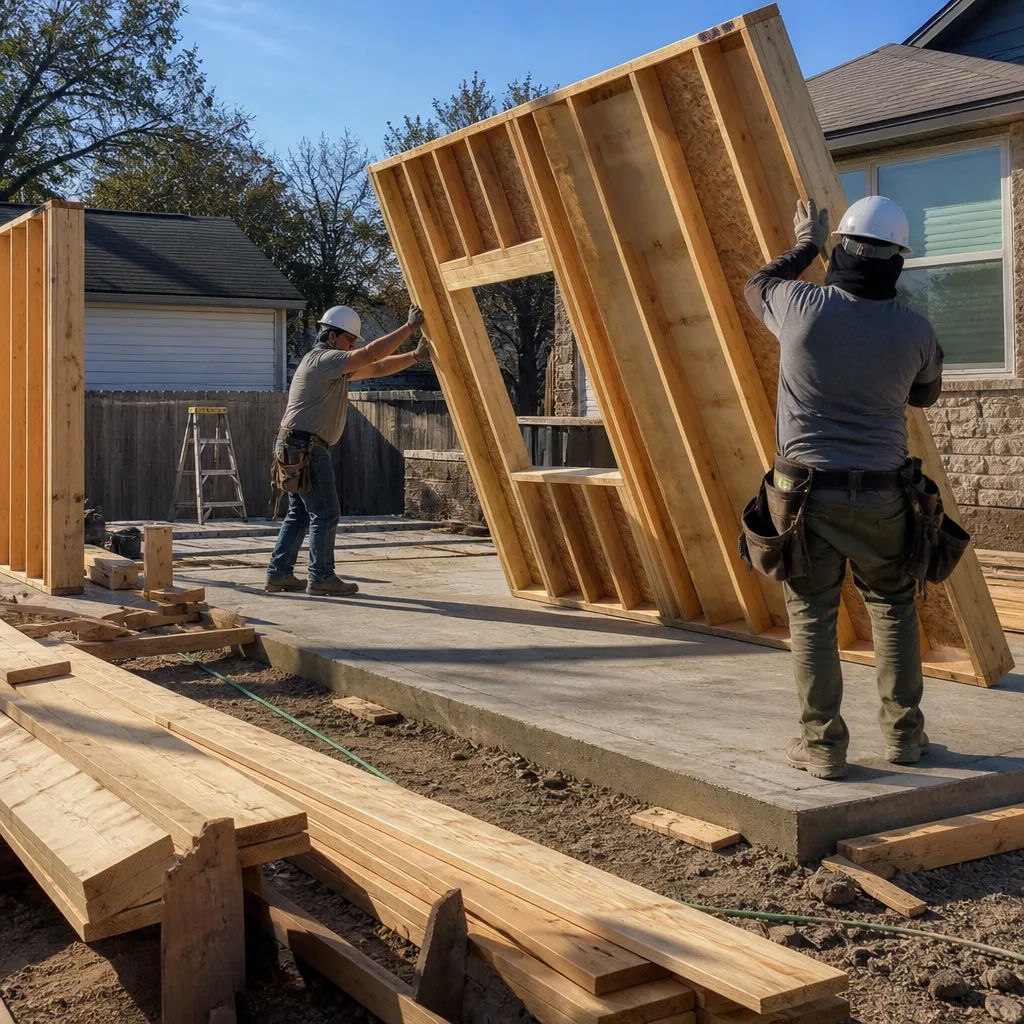
Last updated October 15, 2026
ADU Cost Breakdown: The Fort Worth Homeowner’s Reference for 2026
A Tuff Shed-based ADU conversion and a custom site-built detached cottage can both show up in a Google search as “Fort Worth ADU.” But they’re $80,000 to $220,000 apart in total cost, and they have completely different permit pathways, financing options, and resale impacts. Most homeowners in Fort Worth overpay or end up with undersized units because they price-shop across these delivery tiers without realizing the tiers exist. This guide breaks down exactly what an ADU costs in Fort Worth in 2026, line by line, so you can compare bids intelligently instead of guessing. For a deeper dive, see our The Complete Guide to ADU in Fort Worth.
Quick Answer
An ADU in Fort Worth costs between $90,000 and $280,000+ all-in for 2026, depending on delivery method. Prefab drop-in units like Abodu or Boxabl run $90,000 – $150,000; modular builds from Dvele or Plant Prefab land at $150,000 – $210,000; and custom site-built detached cottages start around $180,000 and climb past $280,000 for larger footprints with premium finishes. Site work variables including utility connections, grading, and driveway access add $8,000 – $22,000 on top of base construction costs regardless of tier. The single most important decision you’ll make is choosing the right delivery method for your lot before comparing contractor bids.
Table of Contents
- The Three Delivery Tiers That Define Fort Worth ADU Pricing
- Site Work Variables That Move Every Number
- The True Cost of Fort Worth Permitting
- How to Read a Contractor Bid Line by Line
- Financing Options Ranked for Tarrant County Homeowners
- ROI: What Fort Worth Rental Comps Tell Us
- Common Mistakes to Avoid
- Frequently Asked Questions
The Three Delivery Tiers That Define Fort Worth ADU Pricing
Before you look at a single bid, understand this: there are three fundamentally different ways to build an ADU in Fort Worth, and each has its own cost structure, timeline, and ADU Permits, Codes & Inspections in TX: What You Need to Know pathway. Comparing a bid from a prefab installer to a bid from a custom home builder is like comparing a production home to a custom estate. The price gap exists for structural reasons that have nothing to do with any contractor trying to get one over on you.
Tier 1: Prefab Drop-In Units ($90,000 – $150,000 all-in)
Prefab drop-in ADUs arrive on a truck as a largely complete structure. Brands like Abodu and Boxabl manufacture these units in a factory, ship them to your Fort Worth lot, and a local crew handles the foundation, utility hookups, and finishing details. The ADU builders in Fort Worth who are authorized to install these brands coordinate the whole process for you.
What drives the cost within this tier:
- Foundation type: A pier-and-beam setup runs less than a full slab. Fort Worth’s expansive clay soils sometimes require deeper piers, adding $3,000 – $7,000.
- Utility distances: The farther your ADU sits from the main house’s electrical panel and sewer line, the more trenching and conduit material you’re paying for.
- Model size: A 400 sq ft studio from Abodu lands at the bottom of this range; a higher-end multi-room Boxabl or similar with upgraded fixtures pushes toward $150,000.
- Delivery access: Narrow Fort Worth alleys or tight lot access can require a crane, which adds $2,000 – $5,000 in a single day.
Prefab quality has improved dramatically. Abodu’s units are designed in California and built to withstand seismic activity far beyond what Fort Worth requires, meaning structurally you’re not sacrificing durability. Boxabl’s Casita model gets attention for its folding-wall design, which keeps shipping costs low but means the unit needs more on-site finishing than a true turnkey Abodu.
Tier 2: Modular Systems ($150,000 – $210,000)
Modular ADUs from manufacturers like Dvele and Plant Prefab occupy the middle ground. These units are built in sections at a factory, then assembled on your Fort Worth property over the course of a few weeks. You get more design flexibility than a drop-in prefab, better energy performance, and a faster build than stick framing. But you’re paying for it.
Dvele units carry a reputation for whole-home energy monitoring and air-quality systems, which is why their base pricing starts noticeably higher than a basic Abodu. Plant Prefab focuses on sustainable materials and architectural design, with panelized wall systems that arrive pre-insulated and pre-wired. For a Fort Worth homeowner who wants a mid-range footprint (600 – 800 sq ft) without the nine-month slog of a site-built project, modular often makes the most sense.
Expect the same site-work costs as any other tier. The manufacturer’s quoted price never includes foundation, utility work, or permit fees in Fort Worth.
Tier 3: Custom Site-Built ($180,000 – $280,000+)
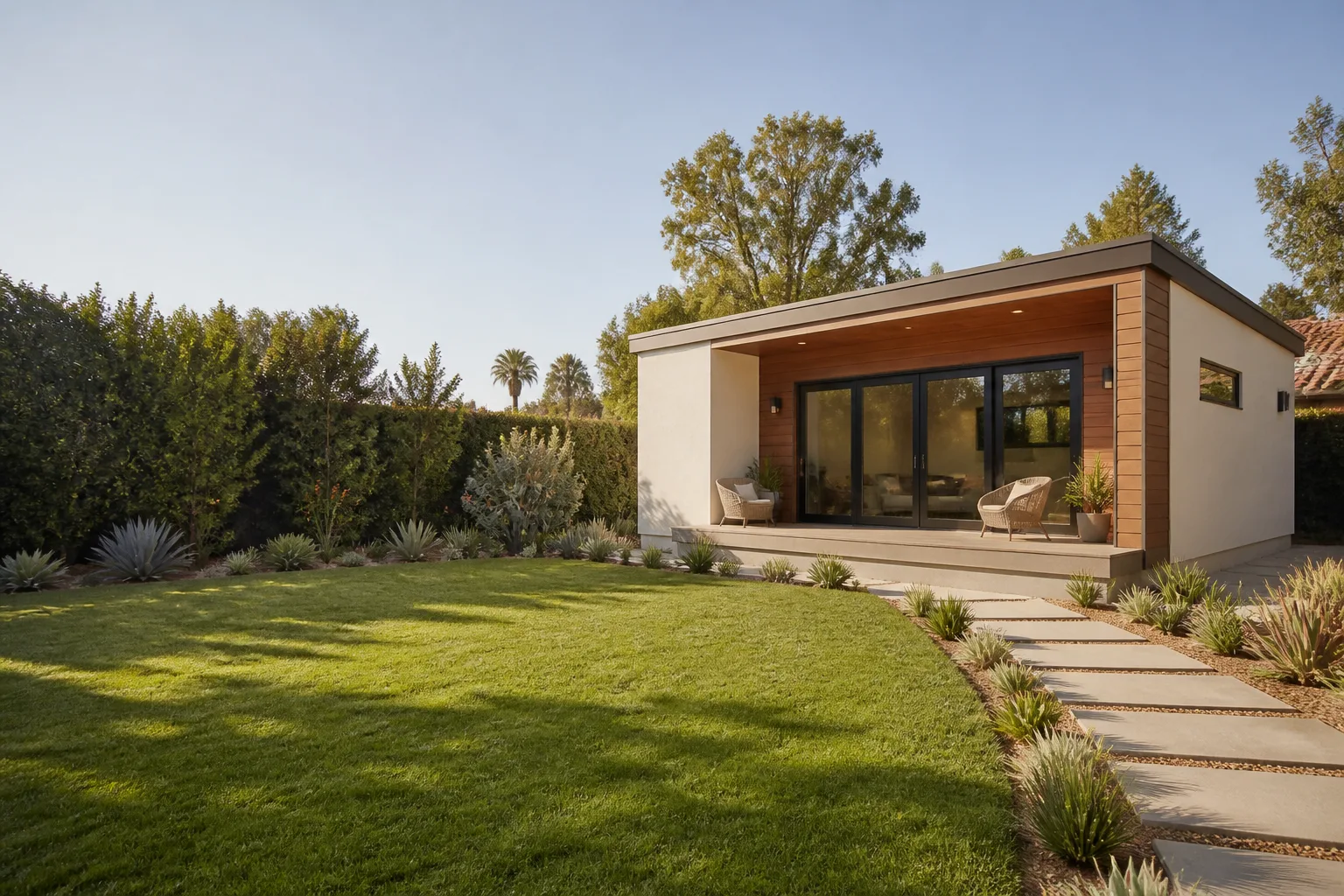
A custom detached ADU built from the ground up on your Fort Worth lot gives you total control over layout, materials, and finishes. You can match your main house’s brick exterior, add a covered porch, vault ceilings, or a dedicated home office with its own entrance. But you’re also paying for skilled labor at Fort Worth’s prevailing construction wage rates, weather delays, and the full duration of a traditional build.
This tier is where the home addition contractor in Fort Worth conversation overlaps with ADU building. Many homeowners who start by planning a simple studio end up expanding scope once they realize they can build something with permanent resale value. A 750 sq ft one-bedroom with a kitchenette, full bath, separate laundry, and James Hardie fiber cement siding will realistically settle between $220,000 and $260,000 in today’s Fort Worth market.
If you’re considering a site-built unit, you should also explore a room addition contractor in Fort Worth as an alternative. Sometimes the better financial move is attaching the square footage directly to the house rather than building a detached structure with duplicated utility runs.
Site Work Variables That Move Every Number
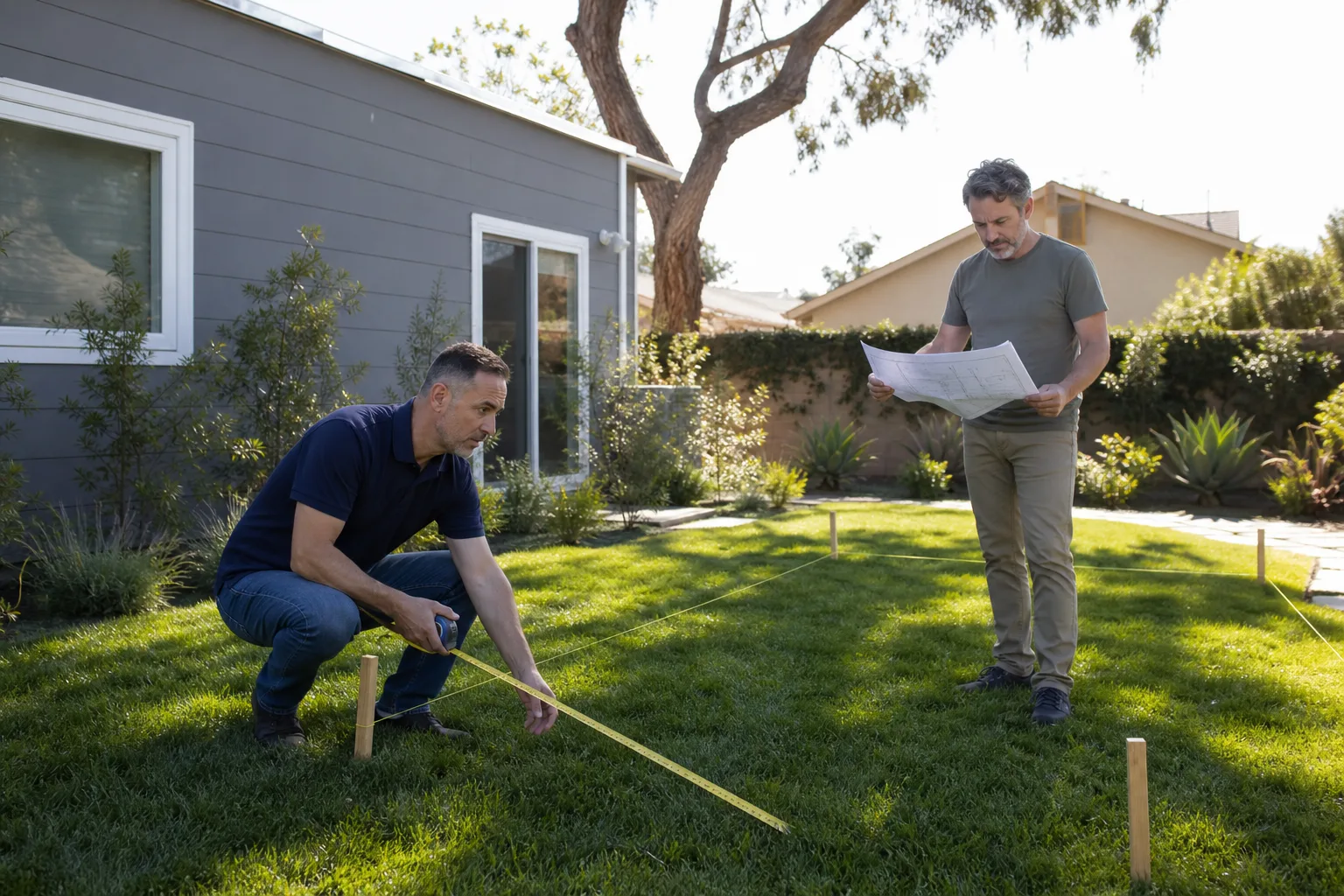
Regardless of which delivery tier you choose, site preparation costs remain the great equalizer. A $110,000 prefab unit can easily become a $135,000 project once the lot is ready to receive it. Here are the variables most likely to surprise Fort Worth homeowners.
Expansive Soil Remediation
Fort Worth sits on a band of clay-heavy soil that expands when wet and contracts during dry spells. This is the single biggest reason foundation costs in Tarrant County run higher than national averages. Depending on your specific lot, you may need soil testing ($800 – $1,500), pier drilling, or a thicker engineered slab. Budget $3,000 – $9,000 for soil-related work unless you have recent documentation showing your lot was previously engineered for a structure.
Utility Connection Costs
Connecting your ADU to power, water, and sewer is not a flat fee. The distance from the main house to the ADU site dictates trenching length. Trenching alone runs $15 – $40 per linear foot in Fort Worth. Then you add the actual connection fees from the water and electrical utilities. Expect $8,000 – $14,000 total for utility work on an average Fort Worth lot, more if your ADU sits at the rear of a deep lot or if the electrical panel needs upgrading to handle the additional load.
Grading and Drainage
Fort Worth’s flat terrain helps here. Unlike Hill Country builds that require significant cut-and-fill work, most Fort Worth lots need only minor regrading for positive drainage. Budget $1,500 – $4,000 depending on how much the grade slopes toward or away from the ADU site.
Driveway and Access
If your ADU will be rented, tenants need a path to the door. A gravel walkway costs under $1,000. A concrete sidewalk or small driveway segment runs $2,500 – $6,000. If you’re adding a separate parking pad, that’s another $3,000 – $8,000 depending on whether the city requires it.
The True Cost of Fort Worth Permitting
Online ADU cost calculators almost always skip permit fees entirely. Fort Worth isn’t the most expensive Texas city to build in, but the fees are real. Here’s a realistic breakdown for a detached ADU in 2026.
- Plan review fees: $500 – $1,200, depending on the scope and whether you need structural engineering review for a custom build.
- Building permit: $1,500 – $3,500 for a typical ADU valuation. Fort Worth calculates building permit fees based on construction valuation, so a higher-end prefab or site-built unit pays more.
- Development impact fees: $2,000 – $5,000. These vary by location within Fort Worth and are applied to new residential square footage.
- Utility connection and inspection fees: $1,500 – $4,000 across water, sewer, and electrical inspections.
- Tree protection or removal: $0 – $3,000. If you have a protected tree species on the lot or near the building envelope, Fort Worth’s tree ordinance may require a preservation plan or arborist report.
Total: $8,000 – $22,000 depending on lot conditions and ADU valuation. This is the range most online calculators leave out. When you’re comparing contractor bids, ask specifically: “Does your price include all permit fees, plan review, and utility connection charges?” The answer should be yes, in writing.
How to Read a Contractor Bid Line by Line
A written bid is your first real look at whether a contractor operates transparently or plans to back-load surprises. Here’s how to parse the document.
Fixed Line Items vs. Allowances
A fixed line item is a price that won’t change. The contractor commits to building that specific component for that specific dollar amount, period. Allowances are different. An allowance is a placeholder budget: “Plumbing fixtures allowance: $4,000.” The actual cost could be $2,500 or $6,500 depending on what you choose. Neither is inherently wrong, but you need to know which items are allowances because they represent potential cost growth.
- Look for the word “allowance” anywhere in the bid. Each one is a variable, not a fixed cost.
- Add up the allowances separately. If allowances represent more than 15% of the total bid, your final price has significant room to move.
- Ask for a line-by-line walkthrough. A transparent contractor will explain what’s fixed and what’s an allowance in plain English.
- Check for exclusions. Does the bid exclude utility connection fees? Tree removal? Soil remediation? If it’s not listed, it will become a change order later.
- Confirm the permit fee treatment. Does the contractor pull permits and include the cost in the bid, or do you pay the city directly? Either is fine, but you need to know.
Where Fort Worth-Specific Costs Hide
Expansive soil remediation is the most common hidden cost in Fort Worth ADU projects. A bid might say “foundation: standard slab” without acknowledging that Fort Worth clay soil may require additional piering. Ask directly: “Does this bid account for expansive soil conditions common in Tarrant County?” If the contractor pauses, you’ll want a soil test before signing anything.
We’ve seen too many Fort Worth homeowners sign a bid that looked competitive, only to receive a change order for $7,000 in soil remediation three weeks in. The contractor wasn’t scamming anyone. The bid simply didn’t account for local conditions. A written price before work starts means the bid should already include site-specific considerations, not assume them away.
Financing Options Ranked for Tarrant County Homeowners
How you pay for your ADU affects your total cost almost as much as what you build. Here are the realistic options available to Fort Worth homeowners in 2026, in order of most to least favorable for most situations.
1. HELOC (Home Equity Line of Credit)
If you’ve owned your Fort Worth home for several years, you likely have equity. HELOC rates for well-qualified borrowers in Tarrant County are running between 7.5% and 9.5% as of late 2025, but the interest is only charged on what you draw. No one checks your contractor’s credentials, no draw inspection is required, and you control the timeline. The downside: your home secures the loan, and rates are variable in most products. LTV limits typically cap borrowing at 80% to 90% of appraised value minus your existing mortgage balance.
2. ADU-Specific Construction Loans
A handful of lenders now offer construction loans specifically for accessory dwelling units. These products usually carry fixed rates slightly above HELOCs, in the 8% to 10.5% range, and include built-in draw schedules that align with construction milestones. Some lenders will underwrite the loan based on projected rental income from the finished ADU, which can increase your approved amount. Availability in Fort Worth has expanded through 2025, with at least four national lenders actively offering ADU loans in Tarrant County.
3. Traditional Construction Loan
A conventional construction loan converts to a permanent mortgage once the ADU is complete. Rates run higher than HELOCs during the construction phase, often 9% to 12%, then settle to a conventional 30-year rate at completion. The approval process is slower and more document-intensive, but this route works well for larger site-built additions where the total project cost exceeds what a HELOC supports.
4. Cash-Out Refinance
If current mortgage rates drop below your existing rate, a cash-out refinance can fund an ADU while potentially lowering your monthly payment. This only makes sense if your existing rate is higher than current market rates, which was common for homeowners who bought between 2022 and 2024. Run the numbers carefully with a Fort Worth-based lender who understands Tarrant County appraisals, because post-construction value needs to support the new loan amount.
ROI: What Fort Worth Rental Comps Tell Us
The financial argument for building an ADU in Fort Worth depends heavily on rental income potential. Here’s what we’re seeing in the market right now.
In the 76107 zip code (Cultural District and Arlington Heights area), a well-finished ADU under 600 sq ft rents for $1,400 – $1,700 per month. These units attract young professionals, medical workers at the nearby hospital district, and couples without children. The demand is strong enough that vacancy periods rarely exceed two to three weeks.
In 76110 (Fairmount and Southside), the comps run slightly lower at $1,200 – $1,500. But the buyer market for homes with existing ADUs is growing there, which means your resale value gets a double boost: the income stream plus the expanded buyer pool.
In 76133 (South Fort Worth near TCU), rents range from $1,300 – $1,600 for under 600 sq ft, driven by graduate students and university staff who want a private entrance and their own kitchen.
Here’s the breakeven math in plain terms:
- At $1,200 per month: A $150,000 ADU pays for itself in about 10.4 years before considering maintenance and vacancy.
- At $1,500 per month: That same ADU breaks even in about 8.3 years.
- At $1,700 per month: Breakeven drops to roughly 7.4 years.
These figures assume you’re renting the unit consistently and managing it yourself. Property management fees would extend the timeline by about 15%. But even at the conservative end of Fort Worth rental comps, a correctly sized ADU recovers its cost within a decade, and you’re left holding an asset that adds permanent value to the property.
Common Mistakes to Avoid
- Comparing bids across delivery tiers without adjusting for the tier difference. A $110,000 Abodu bid and a $195,000 site-built bid are not competitors. They’re different products. Figure out which tier fits your goals before gathering quotes.
- Underestimating the utility connection cost. The trenching, connection fees, and potential panel upgrade add up fast on a deep Fort Worth lot. If your bid doesn’t specify these numbers, you’re guessing.
- Ignoring the soil. Fort Worth clay expands and contracts. Skipping a soil test to save $1,000 up front can cost $7,000 in remediation later.
- Assuming prefab means cheap. A Dvele modular unit with energy monitoring and premium finishes can cost more than a basic site-built cottage. The delivery method matters less than the product spec.
- Financing the project with a credit card or personal loan. Interest rates on unsecured debt run two to three times higher than HELOC rates. A $150,000 project on a 12% personal loan costs dramatically more over its life than the same project on a 8% HELOC.
- Building without a written guarantee. A contractor who won’t put a warranty in writing is telling you something about how they’ll handle problems after the final check clears. The 365-Day Done Right Promise exists because Fort Worth homeowners deserve a clear standard.
- Sizing the ADU around current needs only. A 350 sq ft studio works for one tenant. But a 500 sq ft one-bedroom with laundry opens up the long-term rental market and resale audience significantly, for roughly 20% more cost.
When to Call a Professional
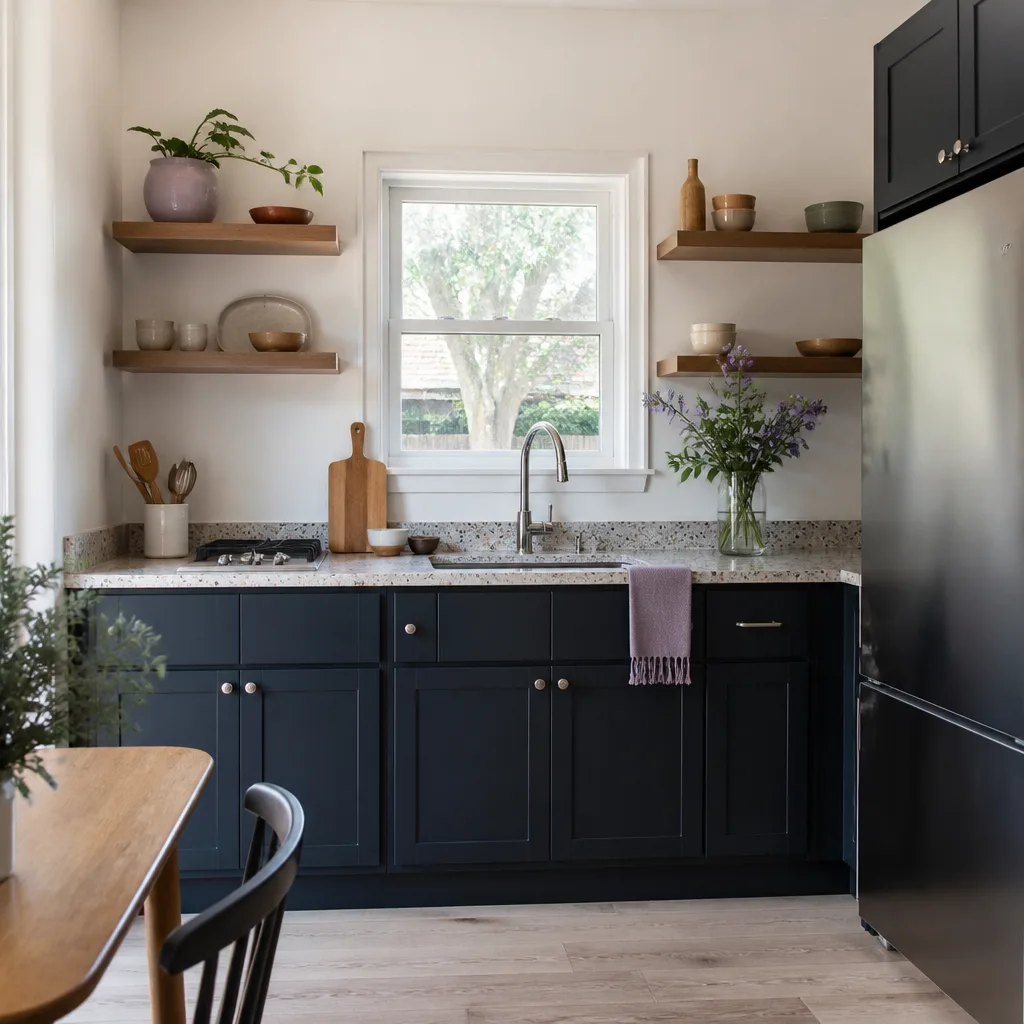
If your Fort Worth lot has any grading complexity, existing utility access issues, or if you’re unsure whether a prefab, modular, or site-built approach fits your budget, call someone who builds ADUs full-time before committing to a direction. The consultation costs nothing, and the clarity you’ll gain about which tier matches your property is worth real money. You can also explore more guides & resources on our blog before you call. Benson ADU Fort Worth offers free estimates in Fort Worth, and our written price before any work starts means you’ll know exactly where you stand from the first conversation. Call (682) 204-9686 to schedule yours.
Frequently Asked Questions
An ADU in Fort Worth costs between $90,000 and $280,000+ all-in for 2026, with prefab drop-in units at $90,000 – $150,000, modular builds at $150,000 – $210,000, and custom site-built projects at $180,000 – $280,000+. Site work variables including utilities and soil remediation can add $8,000 – $22,000 on top of construction costs. Call (682) 204-9686 for an exact quote based on your specific lot.
A prefab drop-in model like Boxabl or Abodu is the most affordable route, typically landing between $90,000 and $150,000 all-in. The lower cost comes from factory production efficiency and reduced on-site labor, not from quality compromises. Keep in mind that site preparation costs are the same regardless of tier.
It shouldn’t, if your contractor provides a written price before any work begins and the bid accounts for Fort Worth-specific variables like expansive soil and utility distances. Allowances in a bid (like fixture budgets) can shift based on your selections, but the contractor should disclose these clearly. Benson ADU Fort Worth writes every price down before work starts, so there are no surprises at the door.
Yes. Detached ADUs in Fort Worth require building permits, plan review, and utility connection inspections. Total permit and fee costs typically run $8,000 – $22,000 depending on lot conditions and the ADU’s valuation. The contractor should handle the permit process and include those fees in the written bid.
Yes, and rental demand is strong in zip codes like 76107, 76110, and 76133, with units under 600 sq ft renting for $1,200 – $1,700 per month. At those rates, a $150,000 ADU typically breaks even within 8 to 10 years. Check your HOA restrictions if applicable, as some neighborhoods in Fort Worth have rental covenants.
Prefab units can be installed and finished in 2 to 4 months from permit approval. Modular builds typically take 3 to 5 months. Custom site-built ADUs run 6 to 12 months depending on scope and weather. Permit review time in Fort Worth adds 4 to 10 weeks to every timeline.
The Bottom Line
Fort Worth ADU pricing in 2026 splits into three distinct tiers: prefab drop-in units at $90,000 – $150,000, modular systems at $150,000 – $210,000, and custom site-built projects at $180,000 – $280,000+. The tier you choose should be driven by your goals, your lot, and your budget, not by whichever bid looks cheapest at first glance. Site work variables, especially Fort Worth’s expansive clay soil and utility connection distances, can add $8,000 – $22,000 regardless of which tier you choose. Get a written price, understand your allowances, and compare bids within a single delivery tier. The Benson ADU Fort Worth home page has more on how we approach every project with transparency from the first conversation.
Written by Troy Eastman, Owner at Benson ADU Fort Worth, serving Fort Worth since 2006.