Last updated October 15, 2026
DIY vs Professional ADU: The Fort Worth Homeowner’s Decision Guide
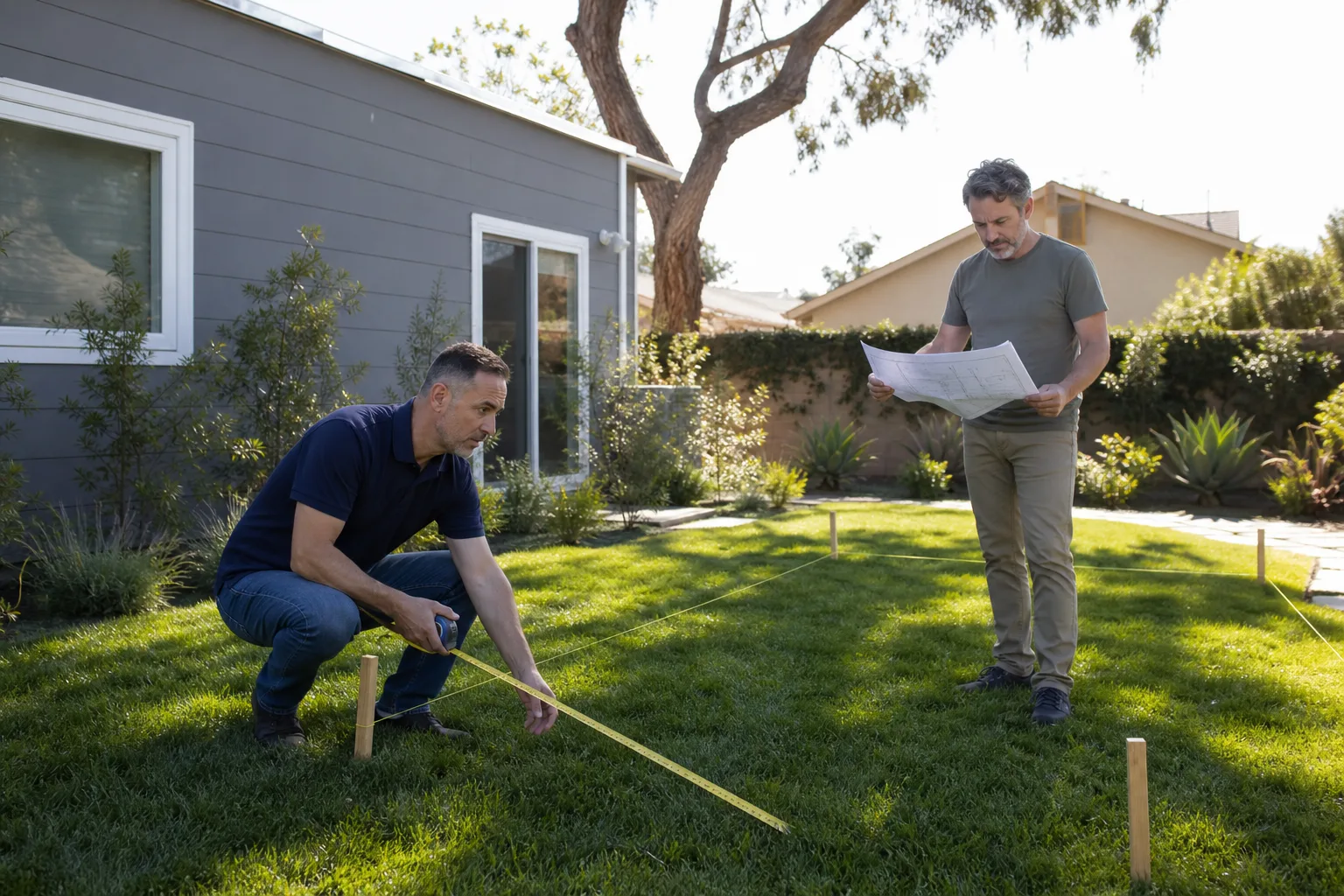
Here is the counterintuitive truth about building an accessory dwelling unit in Fort Worth: Texas law actually lets you owner-build your own ADU without holding a general contractor license, but you still cannot legally touch the electrical panel, run a gas line, or pour a foundation without a licensed trade contractor signing off. So when a Fort Worth homeowner says they “DIY’d” their ADU, what they almost always mean is they acted as their own general contractor, hired licensed subs for the dangerous work, and swung a hammer on the finish side. That distinction changes everything about the cost math, the timeline, and the risk you are actually taking on. This guide walks you through exactly where Texas draws the DIY line, what the Tarrant County owner-builder affidavit really restricts, and where the savings actually land versus where they quietly disappear; for more guides & resources, visit our blog.
Quick Answer
For most Fort Worth homeowners, a fully DIY ADU is not a real option under Texas law because electrical, plumbing, HVAC, and foundation work all require licensed contractors regardless of who pulls the permit. The realistic choice is between hiring a full-service ADU contractor-see our guide on How to Hire a ADU Contractor in Fort Worth: A Step-by-Step Guide-or acting as your own project manager and hiring licensed subs directly, which typically saves 15 to 22 percent on general contractor markup but transfers all scheduling, permit revision, and coordination risk to you.
Table of Contents
- What Texas Law Actually Says About Owner-Built ADUs
- The Tarrant County Owner-Builder Affidavit, Explained
- Real Cost Comparison: Full Professional vs Owner-Managed Build
- Prefab as the Middle Path: Abodu, Cover, Dvele, and Mighty Buildings
- The Insurance and Warranty Gap Nobody Mentions
- Permits, Inspections, and the Fort Worth Timeline
- Which Scopes You Can DIY and Which You Cannot
- Common Mistakes to Avoid
- When to Call a Professional
- Frequently Asked Questions
- The Bottom Line
What Texas Law Actually Says About Owner-Built ADUs
Texas is one of the more permissive states for owner-builders. Under state law, a homeowner can act as their own contractor on residential construction on their own property without holding a general contractor license, as long as the structure is for their own use and not intended for immediate sale or lease to a third party at the time of construction. That last clause matters more than most Fort Worth homeowners realize. The moment your ADU is framed as a rental income play, you are entering grayer territory, particularly with lenders and insurers who want to see a licensed GC on the permit.
But here is the part most DIY guides skip: Texas Administrative Code and the state’s licensing statutes carve out specific trades that an owner-builder cannot self-perform without a license. These include:
- Electrical work beyond replacing a light fixture or outlet cover. Any new circuit, subpanel, service upgrade, or wiring run requires a Texas-licensed electrician. ADUs almost always need a subpanel.
- Plumbing beyond swapping a faucet. New drain lines, supply lines, water heater installation, and gas piping require a Texas-licensed plumber.
- HVAC installation and refrigerant line work. A homeowner cannot legally install a mini-split system themselves in Texas; the refrigerant handling requires an EPA Section 608 certification at minimum, and most municipalities want a licensed mechanical contractor pulling that permit.
- Foundation work that involves structural engineering. You can dig a trench, but the slab design, rebar schedule, and pour sign-off need a licensed engineer and typically a foundation contractor.
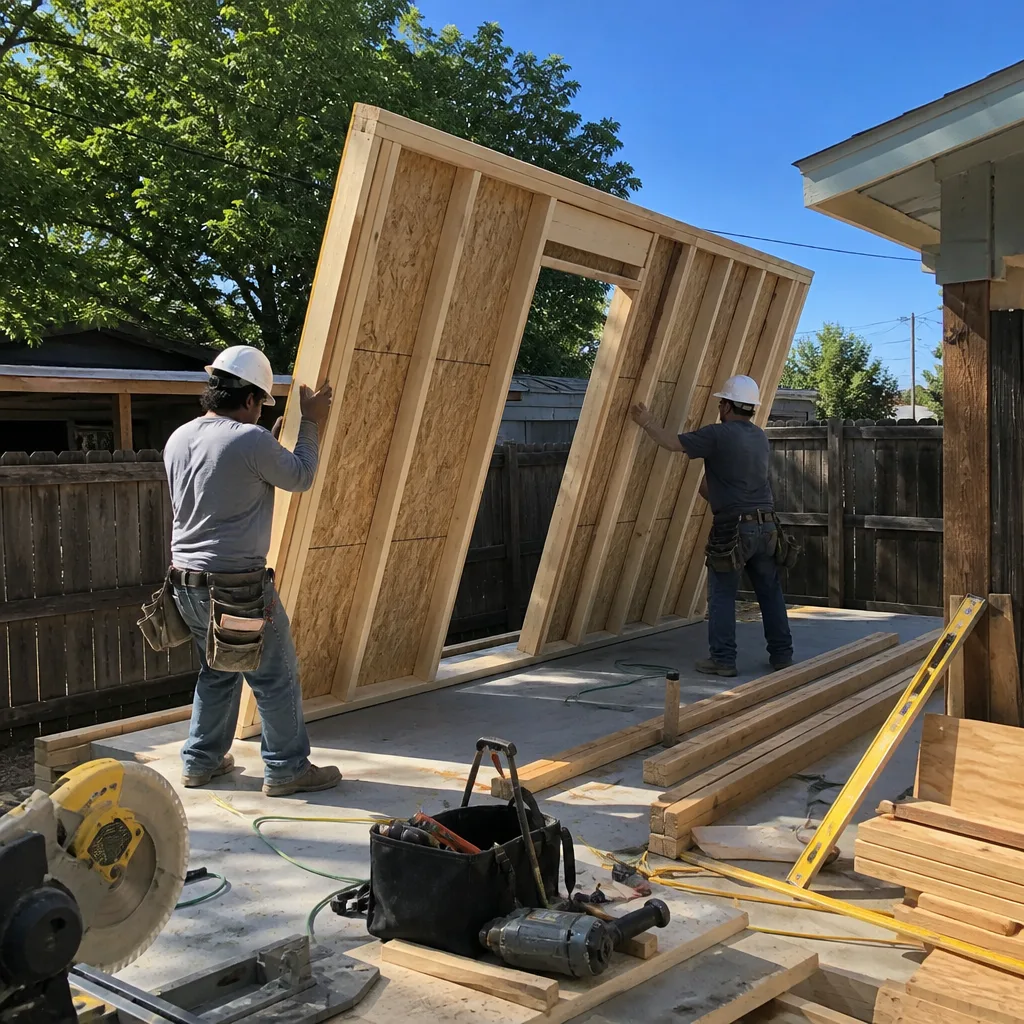
What does that leave the intrepid Fort Worth DIYer? Framing, insulation, drywall, finish carpentry, painting, flooring, tile, trim, cabinet installation, and landscaping. That is real work and real savings, but it is not the whole project. In our experience helping Fort Worth homeowners plan ADUs, the finish scopes typically represent 25 to 35 percent of total project cost. So when someone says they “built their own ADU,” they mean they did the part that shows, not the part that keeps the lights on.
For a deeper look at what full-service ADU construction in Fort Worth involves, see our guide on ADU Builders in Fort Worth.
The Tarrant County Owner-Builder Affidavit, Explained
If you decide to pull the permit as an owner-builder in Tarrant County, you will sign something called the Owner-Builder Affidavit. This is not optional paperwork. It is a sworn statement that changes what you can do with the property after the certificate of occupancy is issued. The affidavit requires you to attest that you are building the ADU for your own use and that you will not sell, lease, or otherwise transfer the property for 12 months after the CO is issued. Signing it falsely is a criminal offense under Texas law, not a slap on the wrist.
Here is what the restriction actually means in practice:
- You cannot list the property for sale for 12 months after the CO. If your ADU strategy was “build it cheap, sell the whole property at a profit,” the owner-builder path kills that plan. The affidavit is designed to prevent exactly that.
- Refinancing gets complicated, but not impossible. Some lenders will not refinance a property within 12 months of an owner-built CO because the appraisal and underwriting process cannot verify who did the structural work. Others will refinance but at a higher rate or with additional documentation requirements. If you plan to pull equity out of the ADU after completion, talk to your lender before signing the affidavit.
- Leasing the ADU before the 12-month window closes is a violation. The rental income strategy that motivates so many Fort Worth ADU builds has to wait a full year if you owner-build. For many homeowners, that single year of lost rent erases the savings from skipping a GC.
- The affidavit follows the permit, not the person. If you sign it and then change your mind and sell anyway, the buyer inherits a property with a permit history that could complicate their own financing. That is a disclosure issue you do not want.
The practical takeaway: owner-building is a legitimate path for a Fort Worth homeowner who plans to live in the home and use the ADU for family or a home office for at least a year. If rental income or a quick sale is part of your strategy, a professionally contracted ADU removes the affidavit restriction entirely because the GC pulls the permit under their license.
Real Cost Comparison: Full Professional vs Owner-Managed Build
Let us talk actual numbers, because most comparison content online gives you percentages without a dollar figure to anchor them. In the Fort Worth market in 2025 and 2026, a professionally built detached ADU with a small kitchenette and full bath runs roughly $175,000 to $220,000 all-in, including permits, materials, labor, and GC markup. That is for a 400 to 600 square foot unit built to code with standard finishes. A garage conversion runs less, typically $120,000 to $160,000, because the shell already exists.
If you owner-manage the same build and hire licensed subs for electrical, plumbing, HVAC, and foundation work, your total lands around $145,000 to $185,000. That is a savings of 15 to 22 percent, and here is exactly where it comes from:
- General contractor markup, typically 10 to 15 percent of total project cost, disappears. On a $175,000 build, that is $17,500 to $26,250.
- Project management fees that some firms charge separately, usually 3 to 5 percent, go away.
- Material sourcing. A savvy owner-builder who shops lumber yards, takes advantage of seasonal pricing, and sources finishes directly can trim another 3 to 5 percent.
But savings evaporate fast in ways most first-time owner-builders do not anticipate:
- Permit revision fees. Tarrant County and the City of Fort Worth charge for resubmissions. A missed detail on a framing plan or a fixture count can trigger a revision fee plus two to four weeks of delay. Professional ADU firms budget for this; owner-builders typically do not.
- Subcontractor coordination delays. Licensed trades in Fort Worth are busy. Electricians, plumbers, and HVAC mechanics are not waiting by the phone for an owner-builder’s call. If your plumber finishes rough-in on a Tuesday and your electrician cannot start until the following Monday, that is five days of dead time. Five days of dead time across an eight-month project adds up to real money if you are paying carrying costs on a construction loan.
- Mistake correction. A framing error caught at inspection means tear-out and redo. A professional has seen the mistake before; an owner-builder is often seeing it for the first time. The materials for a corrected wall section might only be $200, but the labor to fix it and the inspection reschedule add up.
- Tool and equipment costs. Renting a drywall lift, a paint sprayer, a trencher, a dumpster, and scaffolding over several months adds $3,000 to $6,000 that most DIY cost estimates leave out entirely.
The honest math is this: owner-building an ADU in Fort Worth is a part-time job that lasts six to twelve months and pays roughly $15,000 to $40,000 in savings, depending on how much finish work you can genuinely do yourself. That is real money. It is also a real time commitment with real risk. Whether it makes sense depends on your schedule, your skill with tools, and your tolerance for surprise problems. If you want a written price and a team handling the full build, our Home Addition Contractor in Fort Worth page explains how we handle ADU construction from permit to final inspection.
Prefab as the Middle Path: Abodu, Cover, Dvele, and Mighty Buildings
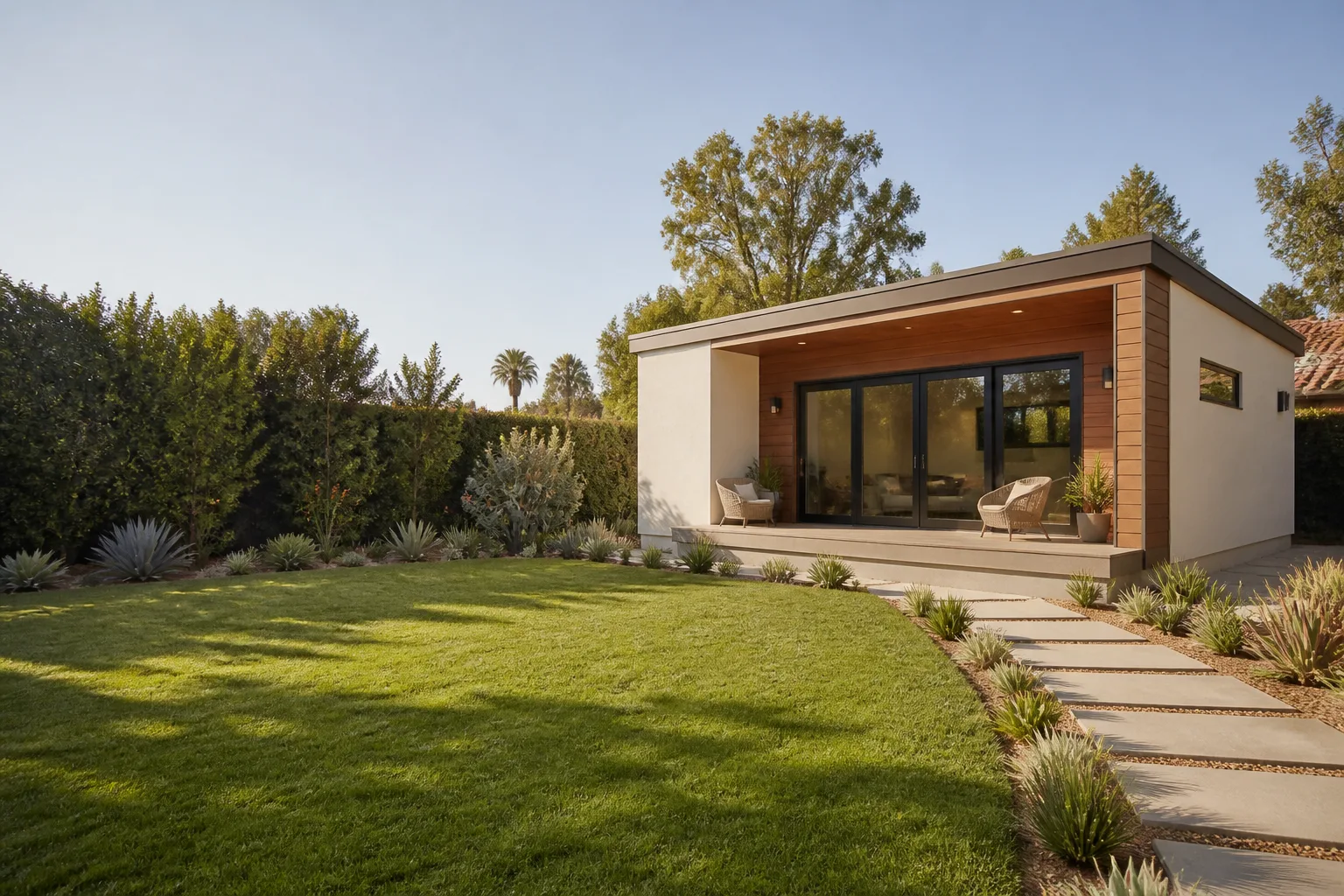
There is a third option that blends the cost savings of owner management with the engineering rigor of a professional build: prefabricated ADUs. Brands like Abodu and Cover deliver factory-built units with structural engineering baked in, and a few manufacturers, including Dvele and Mighty Buildings, push the envelope with panelized or modular construction that dramatically shortens on-site time. The model works like this: the manufacturer ships a nearly complete ADU, and a local contractor or the homeowner handles site prep, foundation, utility connections, and finish trim.
Here is why this path appeals to Fort Worth homeowners who want DIY savings without DIY liability:
- The structural engineering is done. Abodu, for example, designs its units to meet California and Washington seismic standards, which exceed what Texas requires. A factory-built shell carries manufacturer-backed engineering documentation that Tarrant County inspectors accept without the back-and-forth of a site-built design review.
- Permit packages are pre-drafted. Most prefab manufacturers provide a full permit set: structural calcs, energy compliance documentation, and installation details. The homeowner’s job is submitting them, not creating them.
- On-site time shrinks. A site-built detached ADU in Fort Worth takes four to eight months. A prefab unit from Cover or Abodu can be set on a prepared foundation in a few days once permits clear, with utility hookup taking a week or two more. The total timeline shortens significantly, which matters when every month of delay costs money.
- The licensed-trade requirement remains. Prefab does not remove the need for a licensed electrician and plumber to connect the unit to your property’s services. What it removes is the owner-builder’s exposure to structural mistakes, which are the most expensive kind to fix.
We work with several of these manufacturers because the Fort Worth market has embraced the prefab middle path over the past few years. A homeowner can pour the pad, run conduit for utilities, and handle landscaping themselves, then bring in licensed trades for the electrical and plumbing connections. The savings compared to a full professional site-built ADU typically land around 10 to 15 percent, with significantly less coordination risk than a fully owner-managed build.
The Insurance and Warranty Gap Nobody Mentions
This is the section most DIY-vs-professional articles skip entirely, and it is where owner-builders in Fort Worth get hurt most often. When a licensed general contractor builds your ADU, the project carries two forms of protection that owner-managed builds do not automatically receive: builder’s warranty and lender-recognized documentation.
A professional ADU contractor in Texas is responsible for workmanship defects under state law and typically offers a written workmanship warranty. Our 365-Day Done Right Promise, for example, covers our work in writing for a full year after completion, and if a covered repair fails, we return for a free second visit. That guarantee is stamped on every project we build. A homeowner who self-performs finish work has no such warranty, because the warranty is only as good as the person standing behind it, and a DIYer cannot sue themselves for a bad drywall seam.
The insurance picture is more subtle. Your homeowner’s policy covers the existing house and, for most carriers, an attached or detached ADU once it is completed and declared. But during construction, a site-built ADU is covered under a builder’s risk policy, which a professional contractor carries as a cost of doing business. An owner-builder must purchase their own builder’s risk policy, which adds $1,500 to $4,000 depending on the project value, and some carriers will not write builder’s risk for owner-built projects over a certain dollar threshold.
Then there is the financing question. If you are paying for your ADU with a construction loan, home equity line, or renovation mortgage, the lender will almost certainly require a licensed general contractor on the permit. Lenders do not finance owner-built projects at competitive rates because the collateral risk is too high. A few specialty lenders will work with owner-builders, but the rates are higher and the documentation requirements are punishing. The prefab middle path can help here, because a manufacturer’s engineering package satisfies lender diligence in a way a stack of Home Depot receipts cannot.
If you go the owner-builder route and plan to sell someday, document everything. Photograph every stage: trench depth, rebar placement, wall insulation before drywall, subpanel wiring, water heater installation. Keep every invoice from every licensed sub. A complete documentation file is the difference between a buyer’s lender accepting the ADU as legitimate square footage and flagging it as an unpermitted addition at appraisal.
Permits, Inspections, and the Fort Worth Timeline
Building an ADU in Fort Worth means pulling permits through the City of Fort Worth Development Services Department, and the process is not fast. A professionally managed ADU project in Fort Worth typically takes 4 to 8 months from permit submission to certificate of occupancy, depending on scope, weather, and inspection scheduling. An owner-managed build usually runs 8 to 14 months, and the difference is almost entirely coordination time, not construction time.
The permit sequence for a detached ADU in Fort Worth looks like this:
- Zoning and setback verification. Before you draw anything, confirm your lot can legally host an ADU. Fort Worth allows ADUs in most single-family zoning districts, but setbacks, lot coverage limits, and utility easements vary by address.
- Site plan and structural drawings. A licensed engineer must stamp the foundation design. This is non-negotiable for a new structure with a poured slab.
- Plan review. The city reviews your drawings for code compliance. First-time owner-builder submissions commonly take two to three review cycles, with revision fees each time. A professional handles this back-and-forth as part of the job.
- Foundation inspection. Trench, rebar, and forms must be inspected before and after the pour.
- Rough-in inspections. Electrical rough-in, plumbing rough-in, and framing inspections happen separately, scheduled by the respective license holders.
- Insulation and drywall inspection. Insulation goes in, inspection happens, then drywall.
- Final inspections. Electrical final, plumbing final, mechanical final, and a building final. Then the certificate of occupancy.
Fort Worth’s climate adds a scheduling consideration. The wet springs and hot summers mean outdoor work like foundation pours and exterior finishing hit weather delays between April and September. A professional contractor sequences around this-one reason to check our Seasonal ADU Care for Fort Worth: Year-Round Homeowner’s Guide-while an owner-builder often learns the hard way that pouring a slab in a Fort Worth July afternoon is a recipe for curing problems.
Which Scopes You Can DIY and Which You Cannot
Let us put the whole thing in one place. Here is the definitive breakdown of ADU scopes, sorted by what Texas law and Fort Worth permitting allow an owner-builder to self-perform versus what requires a licensed contractor:
- DIY-legal scopes: Site clearing and landscaping, trenching for utilities (trench only, not the connections), form work assistance, framing, sheathing, window and door installation, insulation, drywall hanging and finishing, painting, trim work, flooring installation, cabinet installation, tile work, countertop installation, fixture trim-out (hooking up a sink drain to an already-installed waste line, for example).
- Licensed-only scopes: Electrical panel installation or upgrade, any new circuit wiring, subpanel installation, lighting and outlet installation beyond cosmetic replacement, plumbing rough-in, water heater installation, gas line installation or modification, HVAC system installation, refrigerant line charging, ductwork installation, foundation design and structural engineering, slab pour sign-off, and any work requiring a specialty license.
- Gray areas to clarify with the city: Deck and stair construction, roof work on the ADU (some roof types are DIY-legal; any roof work involving structural modification is not), and siding installation, which is DIY-legal but often has manufacturer installation requirements that affect product warranties.
What this means for your savings calculation: the DIY-legal scopes are where you can genuinely save labor money, and they are also the scopes where mistakes are cheapest to fix. The licensed-only scopes are where the real risk lives, and the law has already decided you are not doing them yourself. The smart owner-builder strategy in Fort Worth is to take the finish work, hire licensed subs for the licensed work, and follow an ADU Builders Maintenance Checklist for Fort Worth Homeowners to keep the project on track from start to long after completion.
Common Mistakes to Avoid
- Signing the owner-builder affidavit without reading it. The 12-month sale and lease restriction is not buried in fine print. It is the entire point of the document. If your ADU strategy involves renting it out or selling the property within a year, do not sign it.
- Assuming a permit is optional. Texas is not a no-permit state, and Fort Worth is not a no-inspection city. An unpermitted ADU discovered at resale can tank the sale, trigger back-permitting that costs more than the original permit, or both.
- Underestimating utility connection costs. Running a new electrical service line, sewer lateral, or water line to a detached ADU can cost $8,000 to $20,000 depending on distance and existing service capacity. Owner-builders routinely leave this out of their initial budget.
- Hiring the cheapest licensed sub without checking insurance. A sub with a valid license but no liability insurance or workers’ comp passes the risk to you. Always verify coverage certificates before work starts.
- Buying materials too early. Fort Worth storage is not free, and materials left exposed to Texas heat and humidity warp, rust, and degrade. Lumber in particular should arrive close to framing time, not months before.
- Skipping documentation for DIY work. If you hang the drywall yourself and later sell the house, the buyer’s lender will want to know who did the work. Photographs of insulation depth, stud spacing, and wiring placement before drywall goes up are worth their weight in appraisal value.
- Changing scope mid-project without revising the permit. Adding square footage, moving a wall, or adding a bathroom after the permit is issued invalidates the permit. The city will catch it at inspection, and the revision process resets your timeline.
When to Call a Professional
If any of these describe your situation, the owner-builder path is probably not for you: you plan to lease the ADU within 12 months of completion; you are financing the project through a lender that requires a licensed GC; you have a full-time job and cannot dedicate 15 to 20 hours per week to project coordination for the next year; you have never managed a trade contractor before; or you simply do not want to be the person the electrician calls at 7 a.m. about a subpanel location. There is no shame in any of these. The professional path exists because coordinating a multi-trade construction project is a skilled job in its own right. If you are in Fort Worth and leaning toward the professional route, Benson ADU Fort Worth home is our main page, and we are happy to walk you through the process. Benson ADU Fort Worth offers free estimates in Fort Worth – call (682) 204-9686.
Frequently Asked Questions
A professionally built detached ADU in Fort Worth typically costs $175,000 to $220,000 for a 400 to 600 square foot unit, while a garage conversion runs $120,000 to $160,000. Owner-managed builds with licensed subs land 15 to 22 percent lower, but the savings come with significant time and coordination demands. Call (682) 204-9686 for a written estimate on your specific property.
No, Texas allows homeowners to act as their own general contractor on their own property without holding a GC license. However, electrical, plumbing, HVAC, and foundation work still require licensed trade contractors regardless of who pulls the permit, so an owner-built ADU is never entirely DIY.
Not for the first 12 months after the certificate of occupancy. The Tarrant County owner-builder affidavit restricts sale and lease of the property for one year, which means the rental income strategy that motivates many Fort Worth ADU builds requires either waiting out the restriction or using a licensed contractor from the start.
Framing, insulation, drywall, painting, trim, flooring, tile, cabinet installation, and landscaping are all DIY-legal in Texas. Electrical panel work, new circuit wiring, plumbing rough-in, gas lines, HVAC installation, and foundation engineering are licensed-only scopes that require professionals.
Prefab ADUs from brands like Abodu and Cover typically save 10 to 15 percent compared to a full professional site-built project, largely because the factory handles structural engineering and on-site construction time shrinks dramatically. The savings are smaller than a fully owner-managed build, but the coordination risk drops significantly too.
A professionally managed ADU project in Fort Worth typically takes 4 to 8 months from permit submission to certificate of occupancy. Owner-managed builds usually run 8 to 14 months, with most of the extra time consumed by permit resubmissions, inspection scheduling, and subcontractor coordination gaps.
The Bottom Line
The DIY-vs-professional question for Fort Worth ADUs is decided largely by Texas law before you ever pick up a hammer. Electrical, plumbing, HVAC, and foundation work are licensed-only scopes, which means every ADU, “DIY” or not, involves professional trades on the dangerous and structural work. The real decision is whether you want to manage those trades yourself and absorb the coordination risk, or hire a contractor who pulls the permit, sequences the work, and carries the warranty. If you plan to rent or sell within a year, the Tarrant County affidavit makes the professional path the only practical option. If you have time, skill with finish work, and patience for scheduling, owner-management can save $15,000 to $40,000. Either way, the smart move is getting a written price before you commit. Call our Room Addition Contractor in Fort Worth team at (682) 204-9686 for a free estimate and a written breakdown of your options.
Written by Troy Eastman, Owner at Benson ADU Fort Worth, serving Fort Worth since 2006.