Mighty Buildings Site Prep & Utilities: The Fort Worth Owner’s Guide
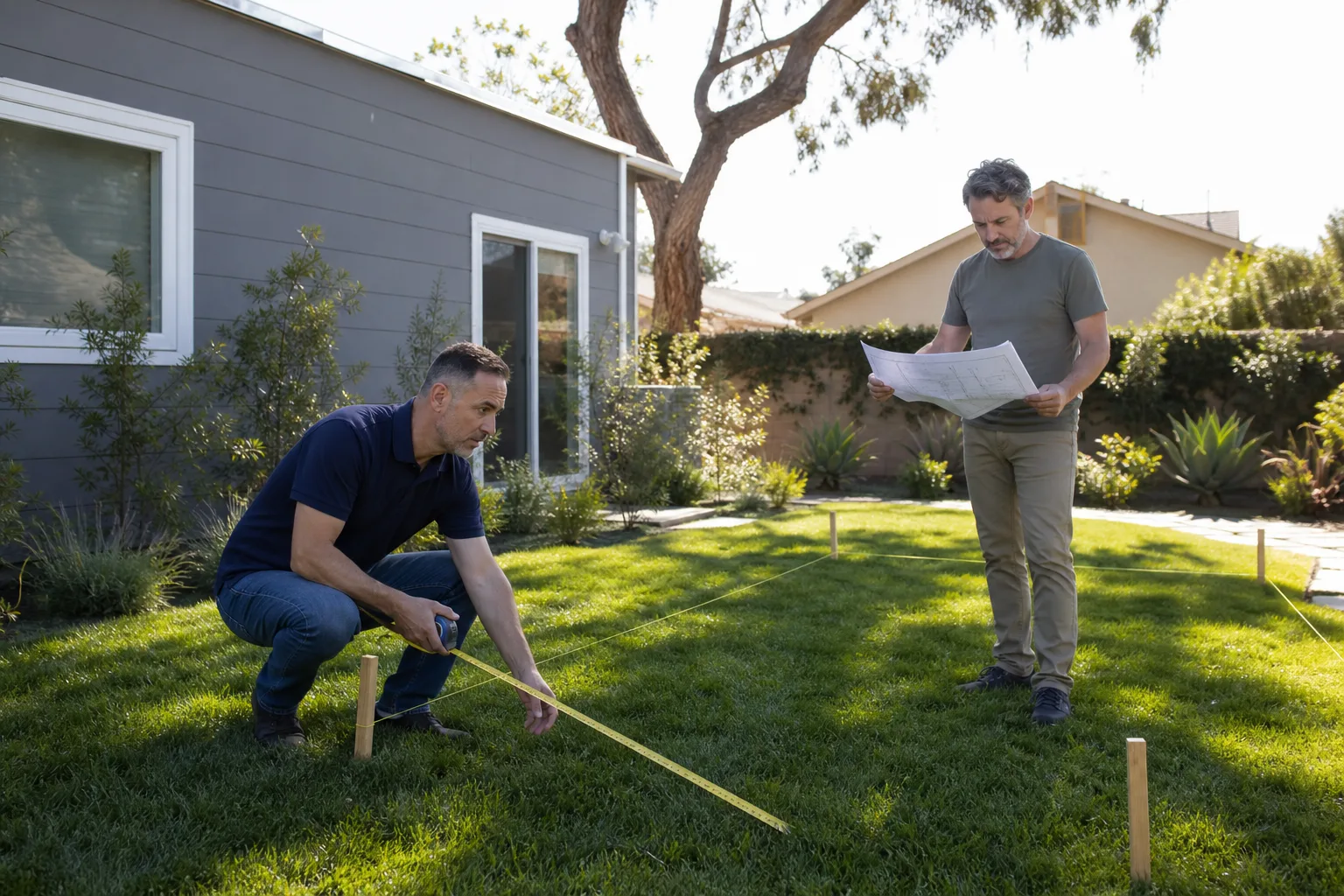
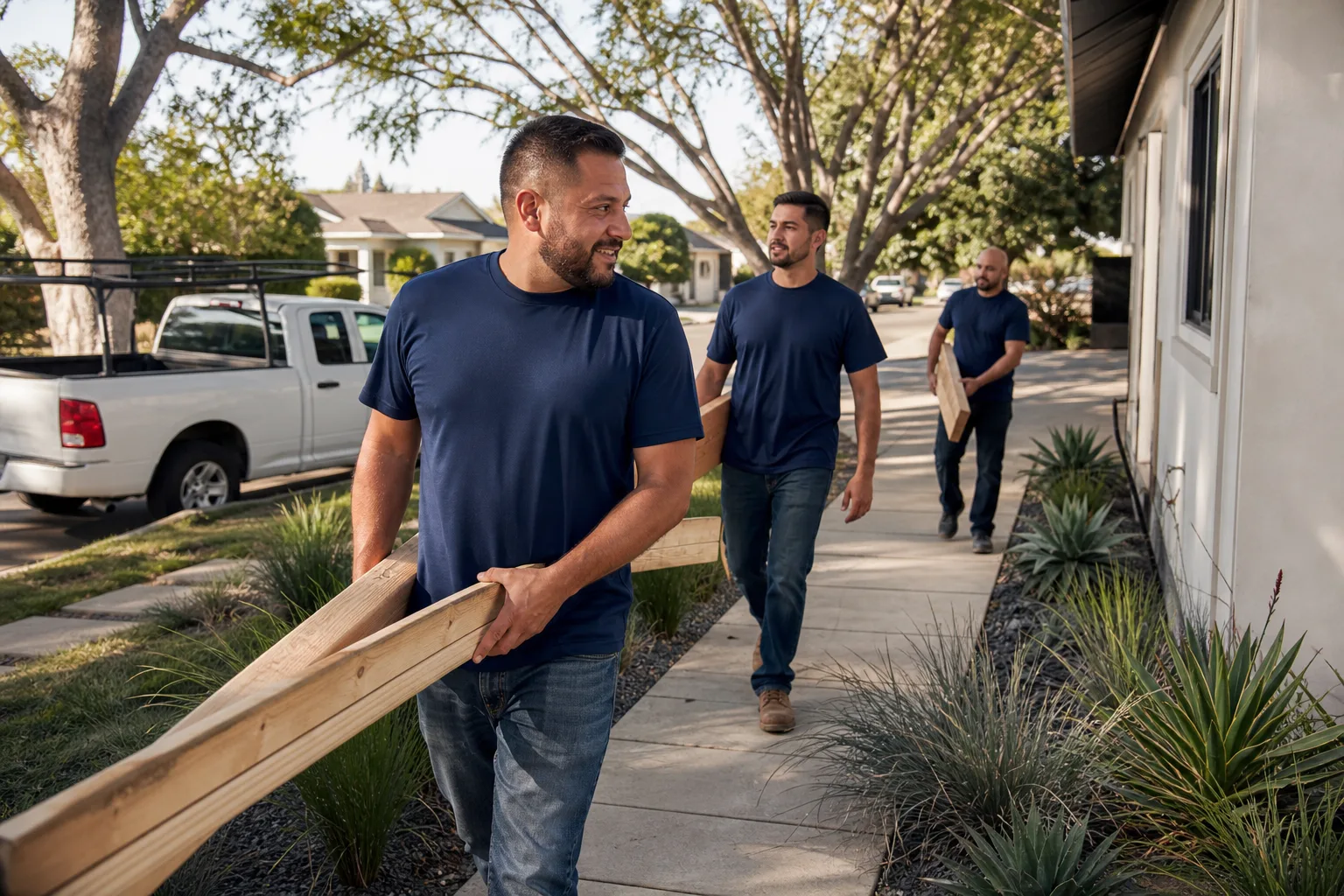
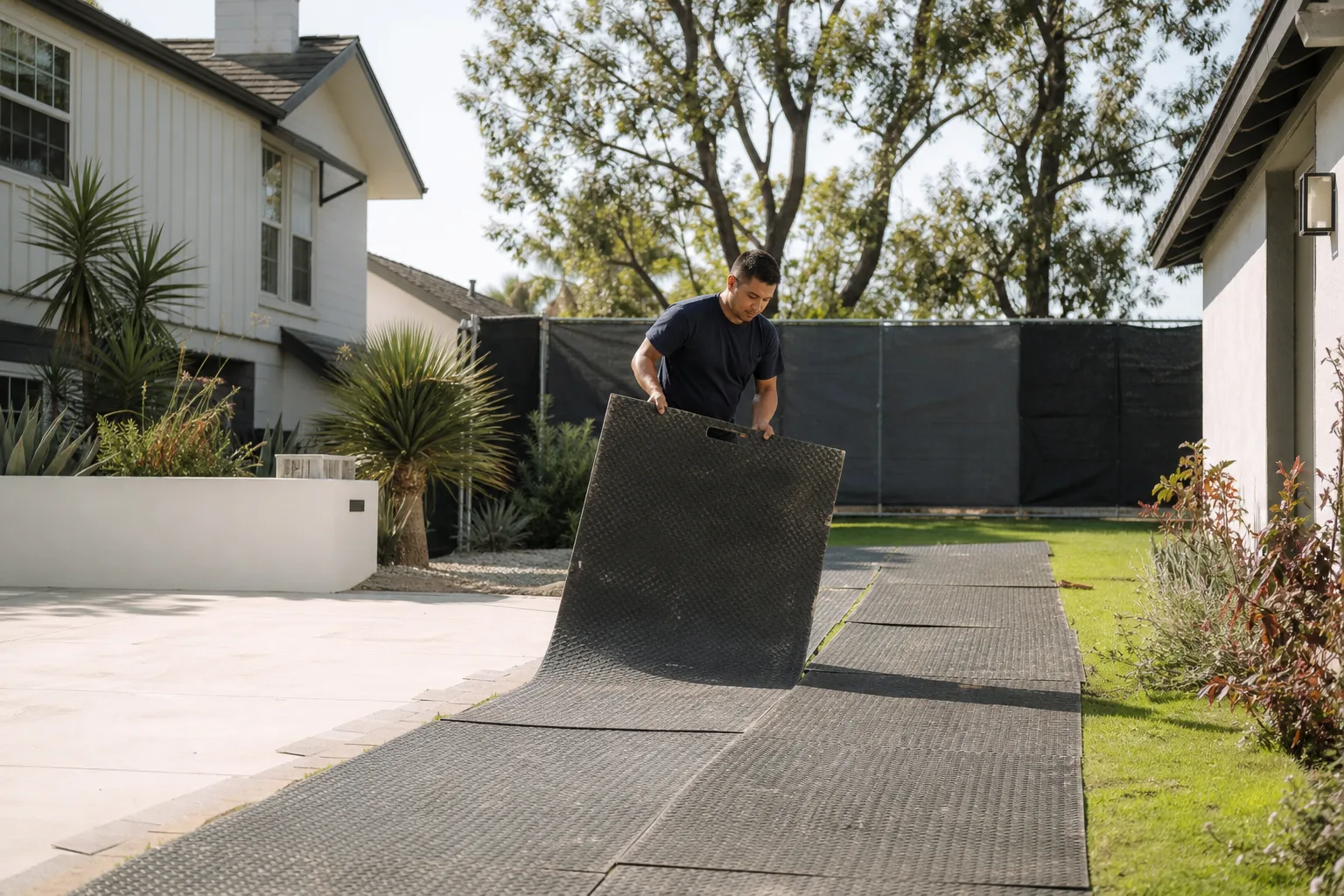
Site prep and utility work for a Mighty Buildings ADU in Fort Worth typically runs $18,000 to $42,000 depending on soil conditions, existing utility access, and how far the unit sits from the main house. We stock and install Mighty Buildings-compatible foundation systems, trenching, and utility connections, and we can usually have a crew on site within a week of your written estimate. Most Fort Worth owners discover a site prep problem the hard way: the unit arrives or the foundation is scheduled, and the ground hasn’t been graded, the sewer line is 40 feet short, or the electrical panel can’t handle the load. None of that is the building’s fault. It’s the dirt, the utilities, and the planning underneath it.
Before we get into the specifics, one thing to be clear about: Benson ADU Fort Worth is an independent service provider. We build with Mighty Buildings products and we know their site requirements inside out, but we are not affiliated with the manufacturer. That independence matters, because it means we’ll tell you straight if a site prep problem is a Mighty Buildings spec issue or a Fort Worth code issue.
Which Mighty Buildings Models This Applies To
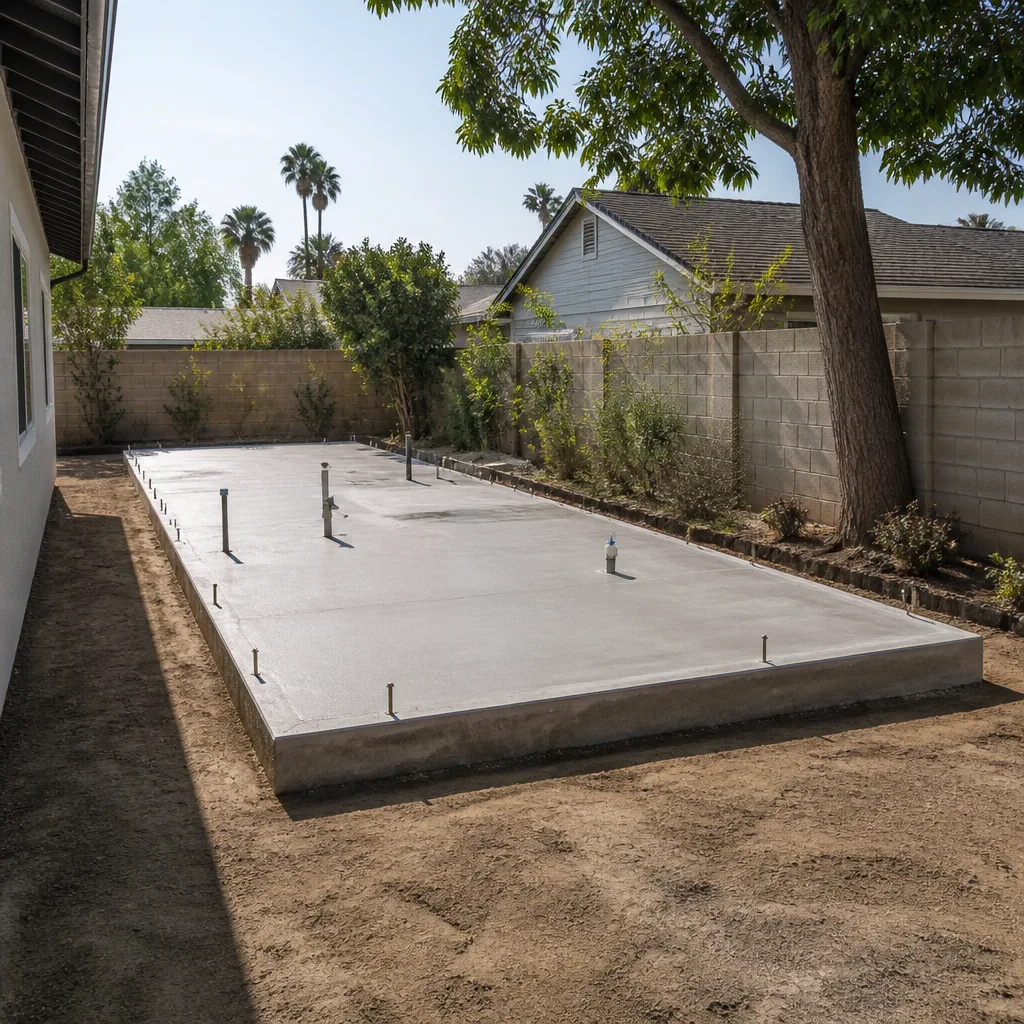
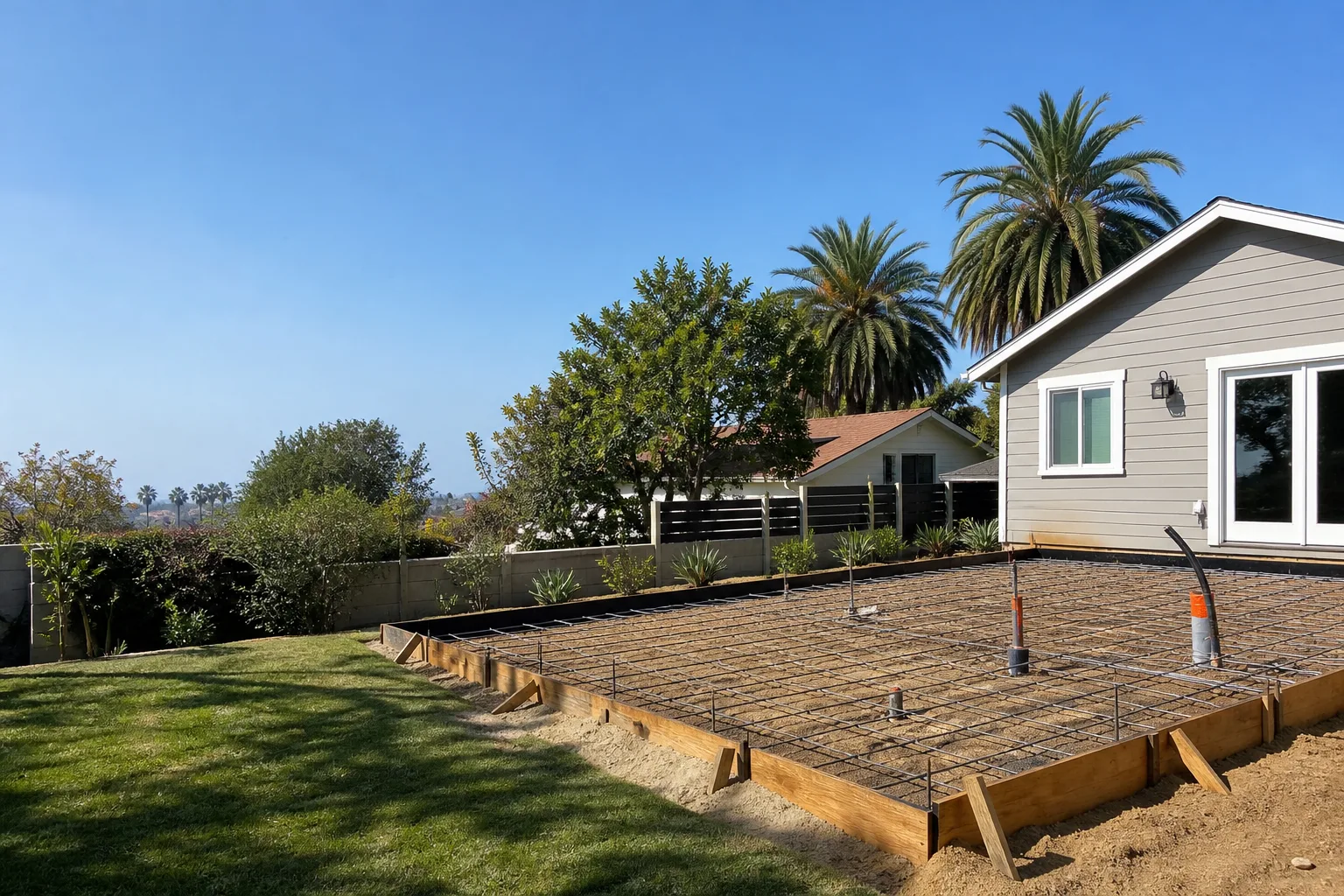
Mighty Buildings produces prefabricated ADU and backyard home models under a few distinct lines, and site prep requirements vary more by model than most owners expect. The Mighty House series (including the one-bedroom and studio configurations) runs on a compact footprint that typically needs a 20 by 20 to 24 by 30 foot pad, depending on the roofline overhang. Their two-bedroom and larger backyard home models push that to a 20 by 40 or wider pad. The panelized wall system on these units is not a trailer-on-blocks setup: it requires a true engineered foundation, either a reinforced concrete slab or a raised pier-and-beam system with specified anchor spacing. You cannot set a Mighty Buildings unit on gravel and call it done.
The compatibility gotcha most Fort Worth owners run into is the utility stub-up location. Mighty Buildings specifies exact locations where water, sewer, and electrical risers must penetrate the slab. If your plumber stubs the sewer three feet off the mark, the fix is not a flexible coupler; it means cutting concrete. Always verify the stub-up drawing against the model number before any concrete is poured. If you have the serial plate or the site spec sheet, bring it to the first call. It saves us both a lot of guessing.
One more thing worth knowing: Mighty Buildings’ panel seams and base track are designed for a slab with less than 1/4 inch of variation over ten feet. In Fort Worth’s clay soil, which shrinks and swells with the seasons, that’s a real specification. A slab that meets code but not that tolerance will still cause door binding and wall racking within a few years. When we prep a site for a Mighty Buildings unit, we over-excavate and compact more than a typical ADU pad, then verify the tolerance with a laser before we call it done.
Signs Your Mighty Buildings Site Prep or Utility Work Is Failing
- Doors start binding or dragging after the first rainy season. Fort Worth’s clay soil expands when wet and contracts when dry, which can lift an under-compacted slab just enough to throw the unit’s door frames out of square. The building didn’t move wrong. The ground under it did.
- You find standing water puddling against the slab edge after light rain. That means the pad wasn’t graded with enough slope away from the structure. Over time, that pooled water works into the slab edge and erodes the base track, especially where the steel meets the concrete.
- Low water pressure inside the ADU when the main house runs a hose or fills a tub. If the site prep didn’t include a proper home-run water line or the line diameter was undersized, the ADU becomes the first thing to lose pressure. This is a fix, but it means trenching back through your yard.
- Breaker tripping when the mini-split kicks on along with the range. The Mighty Buildings electrical load calculation may not have been matched to your panel’s actual capacity. If your site utility plan didn’t account for the full load, the panel browns under real use.
- Sewage odor near the ADU after a dry spell. A sewer stub-out with no trap primer or a slope that dips below code leaves a dry trap, and dry traps let sewer gas back into the unit. It’s a simple fix, but it requires digging up the line and re-sloping.
Replacement Cost & What’s Included
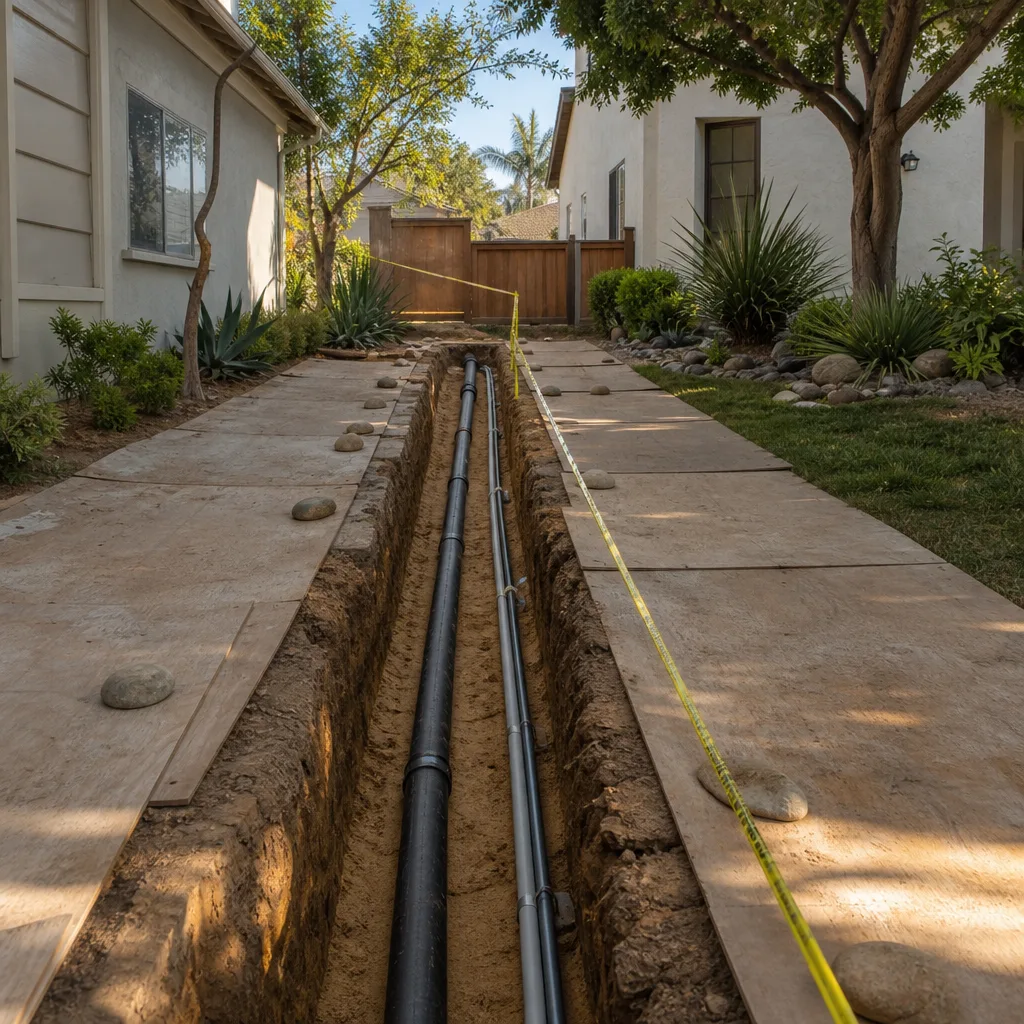
On a Mighty Buildings ADU in Fort Worth, correcting a failed site prep or utility connection runs anywhere from $2,800 for a simple re-grade and re-sleeve up to $38,000 for a full re-excavation, new foundation pad, and complete utility riser rebuild. Most owners spend between $6,000 and $14,000 when the problem is caught early. A full new site build with utilities from untouched grass to unit-ready pad lands in that $18,000 to $42,000 range we opened with.
Here’s what drives the range:
- Soil condition and compaction depth. Fort Worth’s blackland clay needs deeper over-excavation than sandy West Texas soil. Some lots need haul-off and imported fill, which adds $3,000 to $7,000 fast.
- Trench distance from the main home. Every linear foot of sewer, water, or electrical trench is a real cost. A 60-foot run is common on deeper Fort Worth lots, and sewer line at proper slope does not bend around every tree.
- Utility service capacity. If your main panel is maxed out and the ADU needs a sub-panel or a service upgrade, that’s $2,500 to $6,000 before any wire gets pulled.
- Whether concrete has to be cut and removed. A wrong stub-up location on an already-poured slab is two full days of concrete sawing, disposal, and re-pour.
Every estimate from Benson ADU Fort Worth is a written line-item quote. The price we hand you is the price you pay, backed by the 365-Day Done Right Promise: if the site prep or utility connection isn’t right within a full year, we make it right. Written guarantee, every project, no exceptions.
DIY or Call Us?
You can check a few things safely. Walk around the slab after a rain and look for standing water. Measure the slope with a four-foot level. Pop the panel cover off and read the breaker sizes against the load on the Mighty Buildings spec sheet. Do not, under any circumstances, attempt to re-slope a sewer line, move a slab, trench a gas line, or re-pull electrical service. Trench walls collapse in Fort Worth clay. Underground utilities can be five feet or five inches from where the marking spray says they are, and an energized line in contact with wet dirt will kill a person before the breaker trips. That’s not a scare tactic. That’s the reality of dirt work and high-voltage work on a Texas site.
What we’d rather you do is call (682) 204-9686 and describe what you’re seeing. If it’s a real failure, we’ll schedule a site visit, take the measurements, and put a written price in front of you before any shovels turn. If it’s not a failure and the site just settled a quarter inch, we’ll tell you that too and hand you a screen-share of the reading. We’ll never sell you a re-excavation you don’t need.
FAQs
A properly compacted slab on a Mighty Buildings ADU should last the life of the unit, but the grading around it needs attention every 5 to 7 years in Fort Worth because clay soil expands and contracts so aggressively. The slab itself, done right, should not fail for decades. The utility connections need inspection after major drought years, which we’ve had plenty of in North Texas. Call (682) 204-9686 if your pad is showing cracks wider than a quarter inch or if doors have started to bind, and we’ll assess it for free.
That depends on the crack pattern, which is why we measure before we quote. Hairline cracks are cosmetic and normal in Texas. Cracks wider than a quarter inch with vertical displacement mean the slab has moved, and a Mighty Buildings unit needs a stable, level base to keep its panel seams tight. We’ve saved pads with polyurethane foam lifting and re-compaction, and we’ve also had to remove and re-pour. Call us at (682) 204-9686 and we’ll give you a straight answer after a site visit, not before.
A typical utility correction on a Mighty Buildings site takes 3 to 5 working days with our crew. A full site prep from raw dirt to unit-ready pad runs 7 to 14 days depending on weather, trench distance, and whether concrete needs cure time before the unit sets. We give you a schedule in writing before work starts, with a named crew lead and a phone number that gets answered by a live person. If the job runs over, you’ll know why before it happens, not after.
Yes. We keep the common Mighty Buildings site-side components in our Fort Worth shop and on our trucks: anchor bolts and hold-down brackets sized for their base track, sewer and water stub-up fittings, conduit risers, and the under-slab vapor barrier our local inspectors require. We also source and support site prep for other prefab brands we build with, including Abodu, Cover, and Dvele. If the part has to be ordered, we’ll tell you the lead time before you commit to anything.
If it’s not in writing, it’s not a promise – it’s just a conversation.
Got a Mighty Buildings site prep problem or a utility line that’s not doing what it should? Call Benson ADU Fort Worth at (682) 204-9686 and ask for a free site assessment. Troy and our crew will measure, test, and hand you a written price. No surprises. No fine print. Just dirt, concrete, and copper, done right and guaranteed for 365 days.
Written by Troy Eastman, Owner & Lead Builder, Benson ADU Fort Worth at Benson ADU Fort Worth, serving Fort Worth and nearby areas.