HOA & Zoning Compliance in Fort Worth, TX
HOA and zoning compliance means your ADU plans meet two separate rulebooks before construction starts: the city’s zoning codes (setbacks, height limits, lot coverage) and your neighborhood association’s covenants (design standards, rental restrictions, approval timelines). In Fort Worth, skipping this step is the fastest way to lose $2,000 to $8,000 on redesigns or get a stop-work order after excavation begins. Benson ADU Fort Worth handles both tracks as part of our ADU Design & Permitting in Fort Worth service, and we put the compliance findings in writing before you pay for construction drawings.
If you’re just starting to research whether your Fort Worth lot can even hold an ADU, call (682) 204-9686. A live person answers, and we’ll talk through your property’s likely constraints in the first call. No voicemail loops, no waiting until Monday.
When You Need HOA & Zoning Compliance
Most Fort Worth homeowners don’t realize they need compliance review until they’re already deep into planning. Here’s what that looks like in practice:
- You live in a neighborhood with an active HOA. Fort Worth has hundreds of HOAs, from the older deed-restricted neighborhoods around TCU and Ryan Place to the master-planned communities in far north Fort Worth like Harvest, Sendera Ranch, and Park Glen. If you get an annual assessment bill and a newsletter with board meeting minutes, you have covenants to check.
- Your lot is under 6,000 square feet. Fort Worth’s zoning code has specific lot-size thresholds for detached ADUs, and smaller lots in areas like North Hi Mount or Linwood often bump against the minimums. A compliance check tells you in days, not months, whether your lot qualifies.
- You want to rent the ADU out. Short-term rentals face different HOA rules than long-term leases, and some Fort Worth HOAs ban rentals entirely. We research the specific language in your covenants so you don’t build a rental unit your association won’t allow.
- Your existing home sits close to the property line. Fort Worth’s setback rules for ADUs typically require 5 feet from the rear property line and 5 feet from the side, but older lots in Fairmount or Mistletoe Heights often have non-conforming setbacks that trigger variance requests. Compliance work maps out whether you can build as planned or need a Board of Adjustment hearing.
- You’ve already been flagged by your HOA. If you received a covenant violation notice or a zoning complaint from the city after starting work, we step in to review what was flagged, correct the filing, and get your project back on approved footing.
- You’re considering a prefab ADU. Factory-built units from brands like Cover, Dvele, and Boxabl still have to meet Fort Worth zoning and local HOA design standards once they land on your property. We run the same compliance review on prefab plans as we do on site-built drawings.
Our HOA & Zoning Compliance Process
Here’s exactly how we work through compliance for Fort Worth properties, in order:
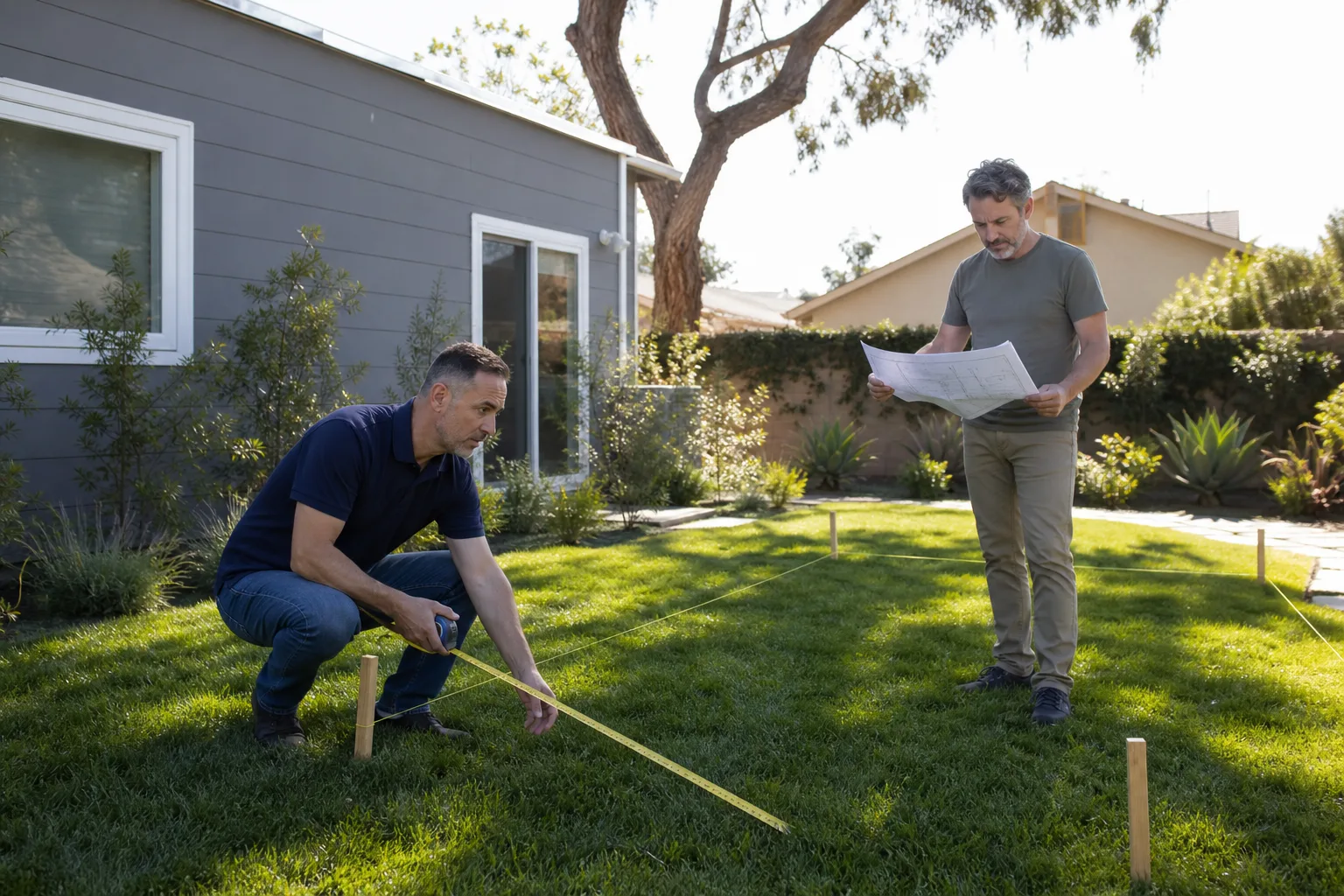
- Property intake and document pull. You give us your address. We pull the current Fort Worth zoning map, your lot’s platted dimensions, any existing easements, and the covenant documents for your HOA if one exists. This step usually takes 2 to 3 business days.
- Zoning feasibility check. We review your lot against Fort Worth’s specific ADU regulations: minimum lot size, rear and side setbacks, maximum height (typically 16 to 25 feet depending on the district), lot coverage percentages, and parking requirements. You get a one-page summary in plain English, not a zoning code dump.
- HOA covenant review. We read the actual governing documents for your association: the Declaration of Covenants, Conditions, and Restrictions, plus any architectural guidelines and amendments. We flag the clauses that affect an ADU: approval timelines, design review fees, material requirements, rental restrictions, and whether an ADU is even permitted under your association’s rules.
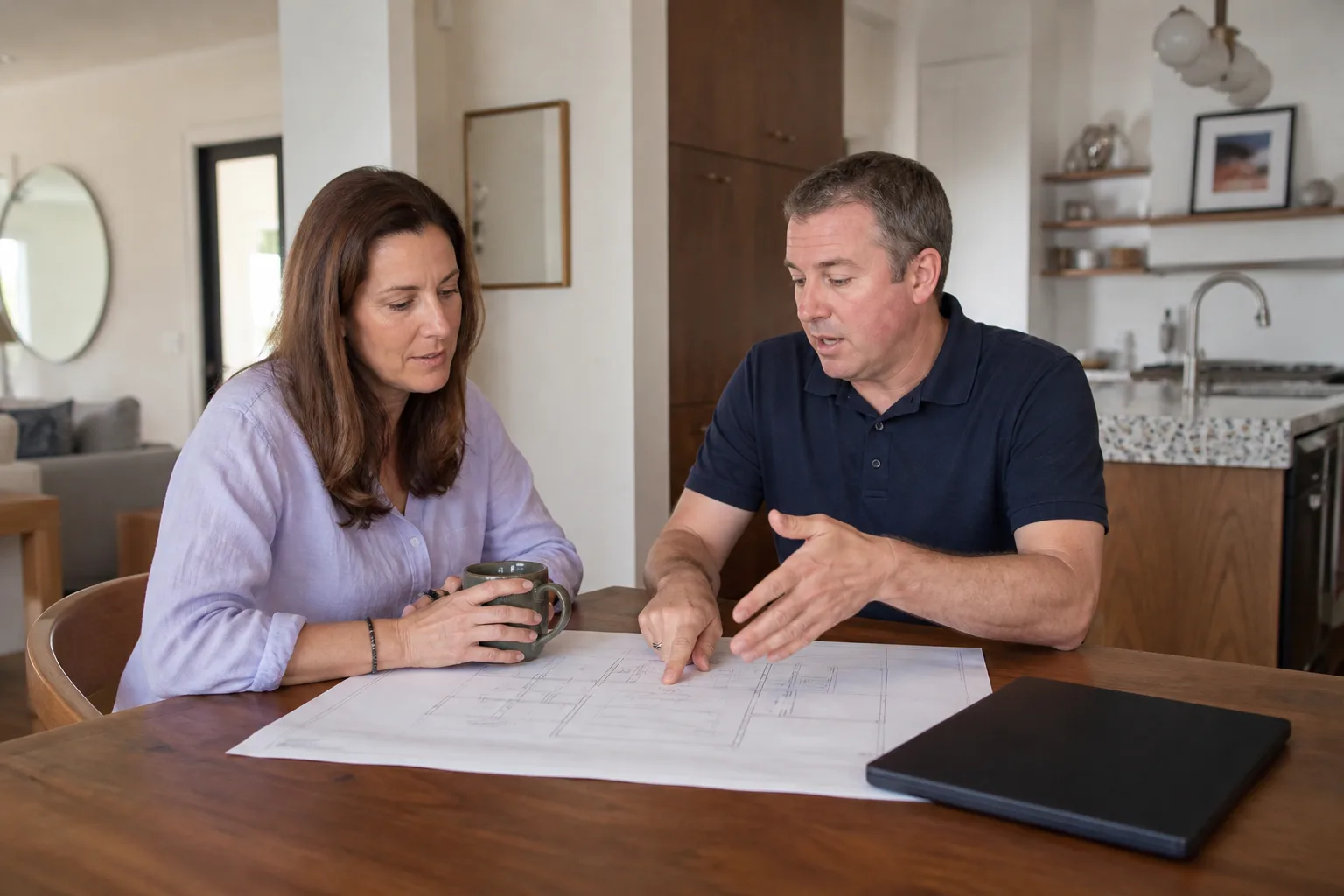
- Written compliance report with a recommended path. We deliver a report that spells out what you can build as-of-right, what needs an HOA variance or city variance, and what won’t fly at all. If a variance is needed, we outline the hearing process, the filing deadlines, and the supporting documents we’ll prepare.
- Plan alignment and submittal. Once we move into design and permitting under our ADU Design & Permitting service, the compliance findings shape the drawings from day one. We submit to both the city and your HOA’s architectural review committee, track both approvals, and keep you updated at each step. Before any of this starts, you receive a written price for the compliance work itself, no verbal estimates that shift later.

HOA & Zoning Compliance Pricing in Fort Worth
HOA and zoning compliance work in Fort Worth typically runs $850 to $2,500 when done as a standalone service ahead of full design and permitting. When bundled with our full ADU design and build package, the compliance review is often included, which is one reason most homeowners go that route once they see the numbers.
What drives the price:
- HOA complexity. Some associations have a one-page architectural guideline sheet. Others have 40-page documents with committee review processes, multiple submittal rounds, and design review fees that range from $100 to over $1,000 depending on the community. More pages, more review time.
- Variance requirements. If your lot needs a setback variance or a height exception, we prepare the variance application, supporting exhibits, and hearing presentation. Variance work typically adds $700 to $1,800 depending on how many waivers are needed.
- Lot irregularity. Flag lots, pie-shaped lots, or lots with creek easements and drainage channels take longer to map against zoning rules. Extra survey work adds to the cost.
- Prefab vs. site-built. Running compliance on a factory-built unit from Dvele or Mighty Buildings often requires an extra round of review because the units arrive as complete modules and must meet Fort Worth’s on-site foundation and connection codes in addition to zoning. We handle that coordination in-house.
Every compliance engagement includes a written price before we start. You’ll know the full cost of the review, the variance work if needed, and the HOA filing fees before you commit a dollar. Call (682) 204-9686 for a free estimate on your property, and we’ll walk through which line items actually apply to your situation.
What Fort Worth Zoning Actually Says About ADUs
Fort Worth updated its ADU regulations in recent years, but the rules remain tighter than cities like Austin or Dallas. Detached ADUs are permitted in many single-family zoning districts, but specific requirements vary by zoning classification. Here are the common constraints we see across Fort Worth neighborhoods:
- Setbacks. The typical rear setback is 5 feet and the side setback is 5 feet, but these change based on the zoning district and whether your lot backs up to an alley. In older streetcar neighborhoods like Arlington Heights or Oakhurst, the original plats often have narrower lots and stricter side-yard rules.
- Height limits. Most detached ADUs in Fort Worth are capped at 16 to 25 feet, measured from grade to the peak of the roof. That’s enough for a one-bedroom unit with a loft, but it rules out most two-story ADU designs.
- Lot coverage. Fort Worth limits how much of your lot can be covered by structures. A 1,000-square-foot ADU on a 6,000-square-foot lot often pushes total coverage past the allowed percentage, which triggers a variance. We calculate this before you fall in love with a floor plan.
- Parking. Depending on the zoning district and your proximity to transit, Fort Worth may require one off-street parking space for the ADU. HOAs sometimes have their own parking restrictions on top of the city’s.
- Owner occupancy. Some Fort Worth zoning districts require the property owner to live in either the primary home or the ADU. If you’re building to rent both units, the compliance review will catch this early.
If you want to verify these rules yourself, the City of Fort Worth’s Development Services department publishes the zoning ordinance online. Fair warning: it’s a dense read, and the ADU provisions reference other code sections that are easy to misapply. That’s exactly the kind of misinterpretation we catch in a compliance review before it costs you a redesign.
Why Prefab ADU Brands Still Need Compliance Review
One misconception we hear regularly from Fort Worth homeowners: “If I buy a factory-built unit, the manufacturer handles the permits.” That’s not how it works. A unit from Boxabl, Cover, or Dvele arrives on a truck with its own structural engineering, but the site-specific work, foundation, utility connections, setbacks, and HOA design approval all happen at your address under Fort Worth’s rules.
Here’s what we’ve seen in practice:
- A Cover unit’s modern flat-roof profile sometimes conflicts with HOA design standards that mandate pitched roofs with composition shingles. We identify that conflict during covenant review, not after the unit is ordered.
- A Boxabl unit’s 19-foot-by-19-foot footprint fits many Fort Worth lots, but the side setback on a 40-foot-wide lot in Handley or Stop Six may not leave the required 5 feet on both sides once walkways and utility pads are counted. We measure the actual site, not just the unit dimensions.
- A Dvele unit ships as a complete module, but Fort Worth still requires local foundation plans, drainage calculations, and utility tap permits. We prepare those as part of the permitting package.
Prefab is a great route for many homeowners, and we’re authorized to build with all of these brands. The compliance step just looks a little different, and we’d rather tell you that upfront than have a delivery truck sitting on your curb with no approved permit.
What Your HOA Can and Cannot Restrict
Texas law gives HOAs broad power over architectural standards, but there are limits. Understanding the difference saves homeowners from either giving up too early or pushing back where they have no leverage.
What HOAs typically can regulate:
- Exterior design, materials, and color palettes. If your association requires brick or stone veneer on all structures, your ADU will likely need to match. This is where a James Hardie siding option often bridges the gap between modern prefab design and traditional HOA expectations.
- Building height and footprint relative to the primary home.
- Rental terms. Many Fort Worth HOAs require minimum lease durations (6 to 12 months) or ban short-term rentals outright. If you’re building for Airbnb income, we need to read your covenants carefully before you invest.
- Construction hours and site cleanliness standards during the build.
- Landscaping and screening requirements after completion.
What HOAs typically cannot do:
- Ban ADUs entirely if the covenants don’t explicitly prohibit them. Vague language like “single-family residential use only” often falls to a legal interpretation, and Texas courts have sided both ways. We flag the ambiguous language and recommend whether to proceed, seek a variance, or get a legal opinion.
- Impose rules that conflict with Fort Worth zoning or state law. If the city says your ADU is permitted by right and your HOA’s restriction effectively bans all ADUs, there may be grounds to fight it. We can connect you with local land-use attorneys who handle these disputes.
- Charge unreasonable design review fees without a documented fee schedule in the covenants.
We don’t practice law, and we’ll tell you when an HOA dispute crosses into attorney territory. For the compliance and design review piece, we’re the crew in the middle making sure the plans meet everyone’s written rules.
How HOA & Zoning Compliance Affects Your ADU Timeline
Compliance work touches every phase of the project, and being realistic about the timeline saves stress later. Here’s a typical sequence for a Fort Worth detached ADU:
- Weeks 1-2: Property intake and zoning feasibility check.
- Weeks 2-4: HOA covenant review and initial architectural submittal to the association. Some Fort Worth HOAs meet monthly, meaning a submission on the 3rd might not get heard until the next board meeting. We build that waiting period into the schedule.
- Weeks 4-8: City permit submittal, plan review comments, and resubmittal. Fort Worth’s typical residential plan review turnaround runs 2 to 4 weeks per round for ADUs.
- Weeks 8-12: Permit issuance and construction start, assuming no variances are required.
If your property needs a Board of Adjustment variance, add 4 to 8 weeks for the hearing schedule and the mandatory public notice period. Variance hearings in Fort Worth require notifying adjacent property owners, and their objections carry weight with the board. We prepare the case documents with the specific hardship argument the board expects to see.
FAQs – HOA & Zoning Compliance
How much does HOA and zoning compliance cost in Fort Worth?
Standalone compliance review in Fort Worth runs $850 to $2,500 based on HOA document complexity, lot irregularity, and whether variance applications are needed. When bundled with full ADU design and permitting through Benson ADU Fort Worth, compliance review is often included in the package. Call (682) 204-9686 for a written quote specific to your address, no obligation.
Can I build an ADU if my Fort Worth HOA doesn’t allow them?
It depends entirely on the language in your covenants. If the documents explicitly prohibit secondary dwelling units, you’re facing an uphill variance fight with your HOA’s board. If the language is ambiguous or silent, you may have a path forward. We review the actual documents and give you a straight answer, including when it’s worth consulting a land-use attorney. Call (682) 204-9686 and we’ll start the review.
How long does HOA and zoning compliance take in Fort Worth?
Zoning feasibility checks take 2 to 3 business days once we have your address. HOA covenant reviews typically add another week, and if your association’s architectural committee meets monthly, submittal timing matters. Full compliance review, including any variance preparation, usually wraps up within 4 weeks. Call (682) 204-9686 and we’ll give you a timeline based on your specific property and HOA.
Is it cheaper to skip the compliance review and just start building?
No, and the math isn’t close. A stop-work order from the City of Fort Worth means paying to halt construction, potentially undoing work that was already completed, and restarting the permit process with a violation on record. HOA fines can accrue daily. A compliance review costs under $2,500 and catches the problems before they become five-figure fixes. Call (682) 204-9686 to make sure your project starts clean.
Why Fort Worth Homeowners Choose Benson ADU Fort Worth for Compliance
Compliance is the unglamorous part of ADU construction, and it’s where contractors who only want to swing hammers tend to cut corners. We built our process around the opposite approach: handle the paperwork first, get everything in writing, and make the construction phase boring because all the surprises were resolved months earlier.
Every Benson ADU Fort Worth project includes The Relay Visibility Guarantee, which means three things in writing:
- A written price before any work starts. The compliance review, the design work, the permits, the build. You see the numbers before you commit.
- A 365-Day Done Right Promise. If anything isn’t right within a full year of completion, we make it right. Stamped on every project in writing.
- A free second visit if any covered repair fails. No arguing about whose fault it is. We come back.
We’re part of the Relay Home Co. family, founded in 2006. Every technician who steps onto your Fort Worth property is background-checked and arrives in uniform. You’ll always know who’s at your door, and you’ll always reach a live person when you call, whether it’s Tuesday afternoon or 2 a.m. on a Sunday.
If you’re ready to find out whether your Fort Worth lot and HOA will allow the ADU you’re planning, call (682) 204-9686 today. We’ll pull your property records, review your zoning and covenants, and give you a written answer along with a written price. No pressure, no vague promises, just the specific facts about your address.
Written by Troy Eastman, Owner at Benson ADU Fort Worth, serving Fort Worth.