Abodu Site Prep & Utilities: The Fort Worth Owner’s Guide
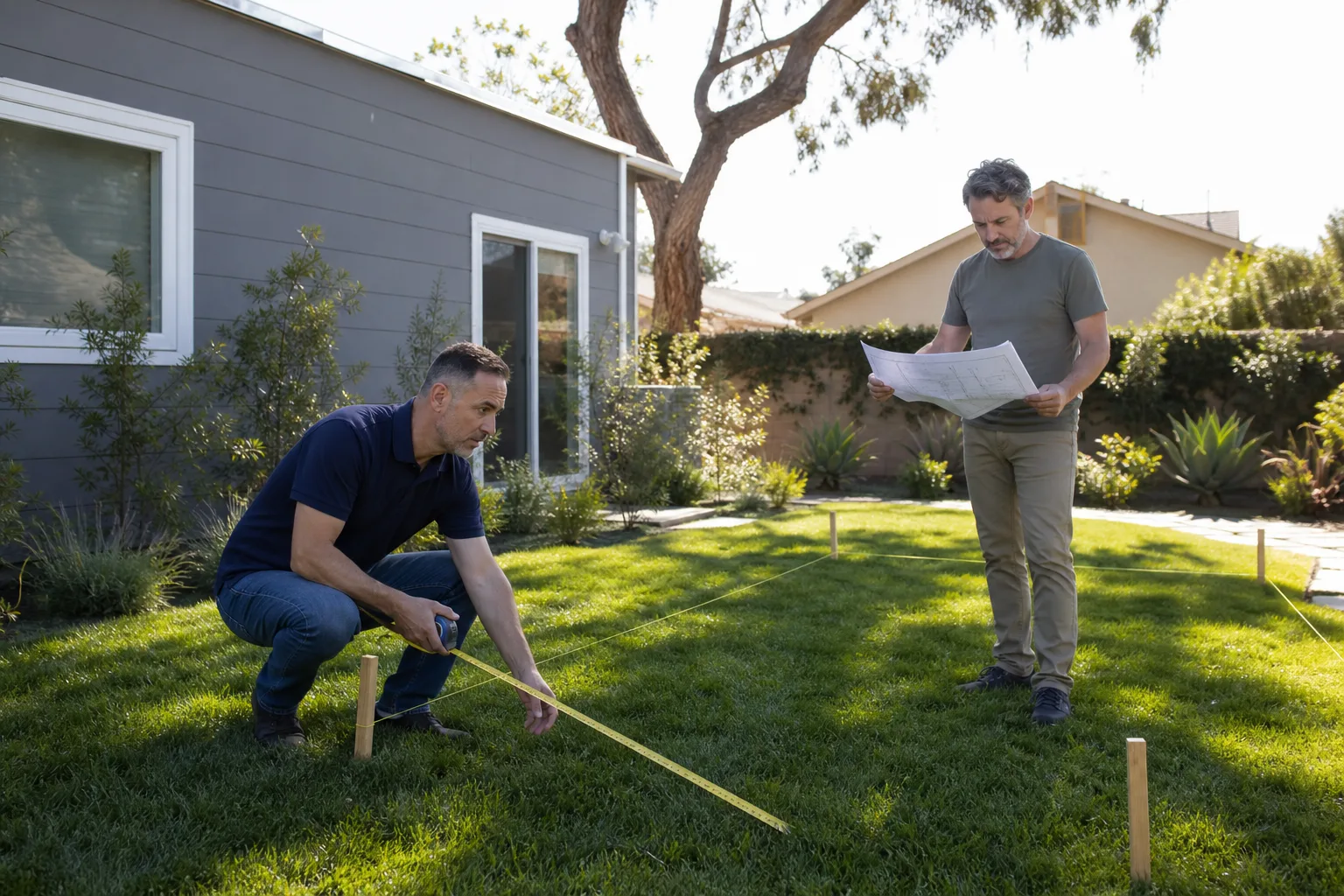
Abodu site prep and utility work in Fort Worth typically runs $25,000 to $60,000, depending on your lot’s access, soil condition, and how far the ADU sits from existing water, sewer, and electrical lines. We stock the common components for Abodu builds – site anchors, utility stub materials, panel connections – and can usually begin prep work within two weeks of permit approval. Most owners discover site prep problems after they’ve already ordered their unit: the survey reveals a setback issue, or the soil report comes back with expansive clay that needs deeper footings than the standard spec assumes.
Abodu units are among the most precise prefab shells on the market, which means the site work underneath them has to be equally precise. We see this every week in Fort Worth – a homeowner falls for the factory price, then realizes the ground under the unit is its own separate project. That is not a criticism of Abodu. It is simply the reality of any prefab ADU. The land does not come prefabricated.
Which Abodu Models This Applies To
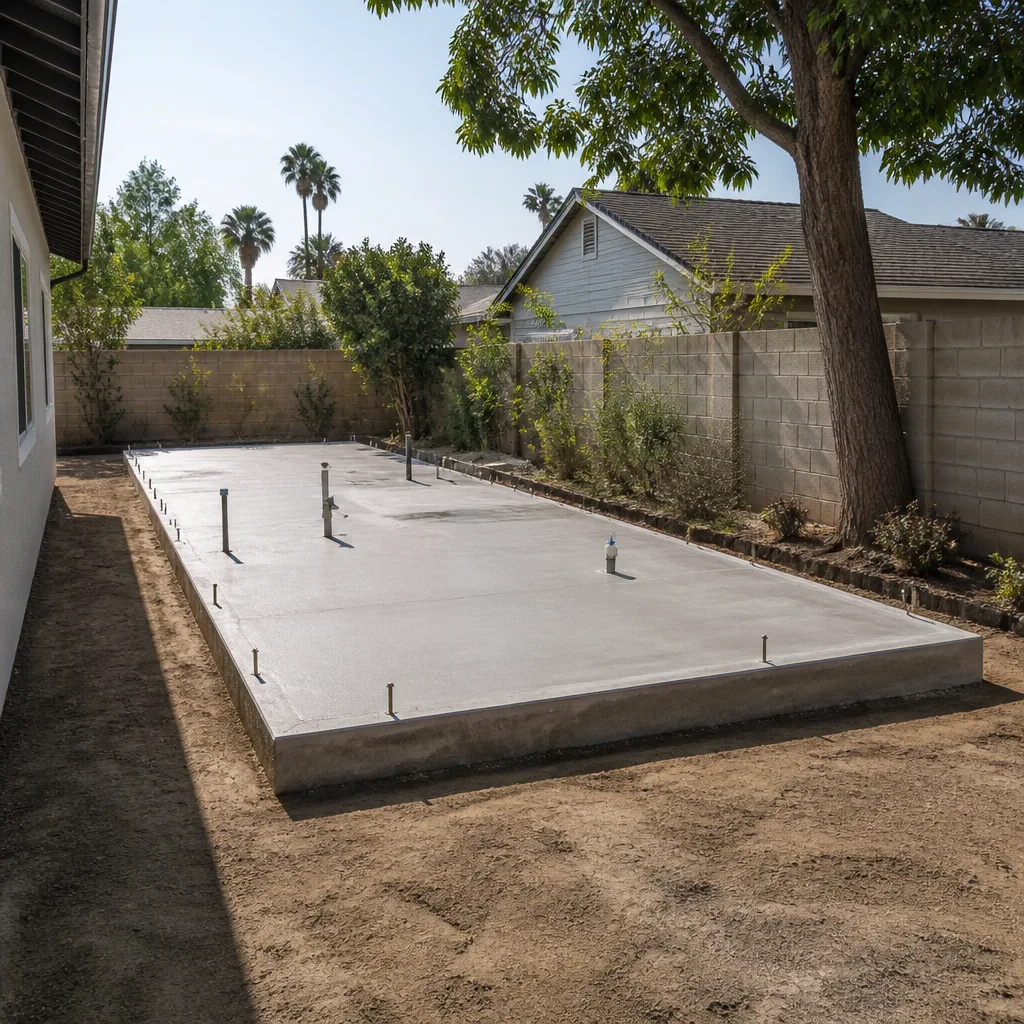
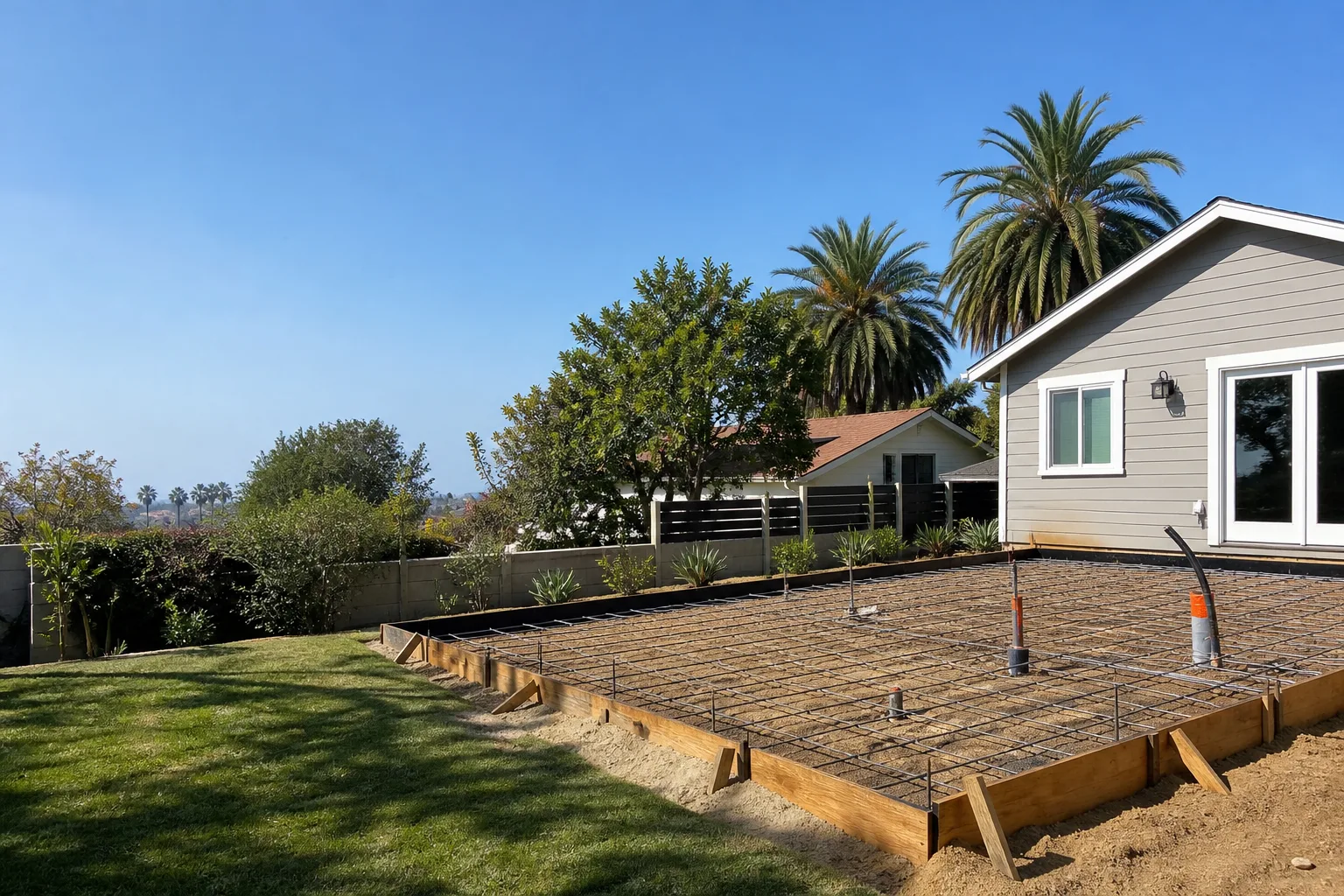
All current Abodu studio, one-bedroom, and two-bedroom models sit on the same fundamental foundation approach: a perimeter stem wall or pier-and-beam system, depending on your lot. The utility requirements do not change much between sizes – what changes is the service capacity. A two-bedroom Abodu pulls more electrical load than a studio, which affects panel sizing and possibly your meter configuration.
If you are trying to identify what your specific unit needs, start with the site plan Abodu provided at purchase. Look for the utility connection points, usually marked on the plan as “W,” “S,” and “E” with dimensioned offsets from the unit corners. One compatibility gotcha we run into frequently in Fort Worth: older Abodu units (pre-2021 builds) were spec’d for a 100-amp subpanel, while current models ship ready for 200-amp service. If your unit is older and you are planning an electric vehicle charger or heat pump water heater, the utility work needs to account for that now rather than after the walls are up.
For site components – anchors, hold-down straps, sill gaskets – we recommend sticking with what Abodu’s spec sheet calls for. There are quality aftermarket equivalents for many of these parts, but the engineered details on an Abodu unit were calculated around specific fastener and anchor products. Saving $200 on aftermarket hold-downs is not worth an inspector’s red tag. The parts we stock on our Fort Worth trucks are matched to the common Abodu series: standard galvanized anchors, the specified epoxy for anchor bolts, and the utility stub hardware the plumbers and electricians pull through after set.
We are an independent Fort Worth contractor. We build with Abodu products, but we are not operated by or affiliated with Abodu. That matters because it means we can tell you honestly when a spec is worth questioning, rather than defending the brand by default.
Signs Your Abodu Site Prep & Utilities Is Failing
- Visible cracks in the stem wall or perimeter footing. Fort Worth’s clay soil expands and contracts with moisture, and a shallow or undersized footing will telegraph that movement straight through the concrete. Hairline cracks are normal in the first year; cracks wider than a quarter inch are not.
- Water ponding near the unit after rain. Site prep includes grading and drainage, and when it is done wrong, water collects against the foundation. Abodu units sit low to the ground, so standing water becomes a moisture problem inside the wall assembly faster than you would think.
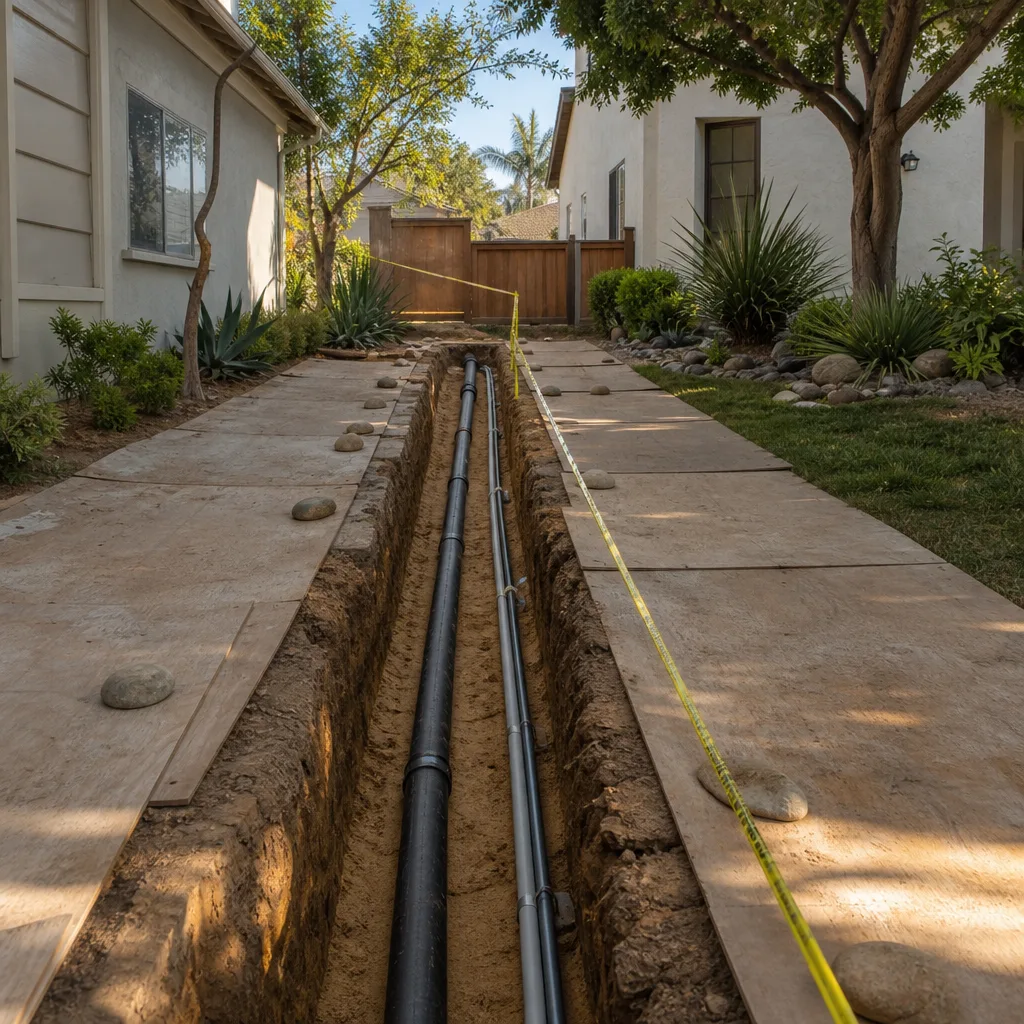
- Electrical tripping when running multiple appliances. If the utility trench was undersized or the subpanel was spec’d for a smaller load than the unit actually draws, you will feel it the first time the AC and dryer run at once.
- Sewer line gurgling or draining slowly. Prefab units connect to the city line or a septic system through a stub-out placed during site prep. If the slope is off or the line was backfilled poorly, drainage slows down within months, not years.
- Doors inside the unit that no longer close square. A shifting foundation shows up first in the door frames, because the unit’s factory-perfect geometry gets pulled slightly out of plane. This is the most common early sign that site anchoring was deficient.
If you are seeing any of these, do not wait for the problem to settle itself. It will not. Fort Worth’s soil does not correct its own behavior, and a foundation issue left alone becomes a wall and roof issue within a year or two.
Replacement Cost & What’s Included
If the site work under your existing Abodu unit needs correction or upgrade, Fort Worth pricing depends largely on access and scope. Here is the honest breakdown:
- Drainage correction and regrading: $3,000 to $8,000 depending on lot slope and whether retaining walls are needed.
- Foundation repair or anchor replacement: $5,000 to $18,000. Pier adjustments are on the lower end; re-pouring a failed stem wall section pushes higher.
- Electrical service upgrade (100 to 200 amp): $3,500 to $7,500 if the existing trench and conduit can be reused; $8,000 to $14,000 if new trenching is required.
- Sewer line replacement to the city connection: $4,000 to $12,000 in Fort Worth, driven almost entirely by trench depth and distance to the main.
- Full site prep for a new Abodu install: $25,000 to $60,000, including survey, soil report, foundation, utility stubs, grading, and permit coordination.
Every quote we give at Benson ADU Fort Worth is a written, line-item price before work starts. No change orders after the fact, no “we discovered a problem” phone call that doubles the bill. The 365-Day Done Right Promise applies here like it does on every project: if the site work is not right within a full year, we make it right. In writing, on every job.
DIY or Call Us?
There is a real safety line here, and it matters. Anything involving trenching, gas lines, electrical panels, or foundation work should not be DIY. Fort Worth requires permits and inspections for this scope, and a homeowner doing unpermitted utility work will have trouble when the unit is appraised, insured, or sold. Utility trench collapse is a genuine risk in Fort Worth’s clay soil, and gas work done wrong is how houses get damaged or people get hurt.
What a homeowner can safely do: monitor grading and drainage after heavy rain, keep gutters and downspouts directed away from the unit, check for visible cracks seasonally, and photograph everything so you have a record. That is useful, honest participation. If something looks wrong, call us at (682) 204-9686 and we will take a look. Estimates are free, and you will have a written number before any work gets greenlit.
FAQs
A properly built Abodu foundation and utility system in Fort Worth should last 50 years or more, but the drainage and grading around it need attention every few years because clay soil shifts with moisture cycles. Most site prep failures we see are not age-related – they are installation-related. The work was rushed or under-specced from the start.
Yes, and that is the more common path. Foundation piers can be adjusted, drainage can be regraded, and anchors can be re-epoxied without demolishing the slab. The question is whether the original work was so deficient that patching it would be throwing good money after bad. We will tell you which one you have, because the written quote depends on it. Call (682) 204-9686 for an evaluation.
Typical site prep for an Abodu unit in Fort Worth runs four to eight weeks from permit approval to a pad ready for the factory to set the unit. That timeline stretches longer when the lot has access constraints, or when the utility main is across a wide yard.
We stock the standard anchors, hold-downs, and utility stub hardware matched to common Abodu series. For less common parts – oversized anchors, specialty epoxy, deep pier brackets – we order from local Fort Worth suppliers and usually have them in hand within two to three business days. If you are in the middle of a build, call (682) 204-9686 and we will check availability while you are on the phone.
Get a Written Price Before You Decide
Site prep is the least visible part of an Abodu project and the most expensive place to cut corners. A prefab unit is only as good as the ground it sits on and the utilities that serve it. At Benson ADU Fort Worth, we price that work the same way we price everything else: line-by-line, in writing, before anything gets built. Troy Eastman leads the team personally on site prep and foundation work, and he will tell you exactly what your lot needs – and what it does not. Call (682) 204-9686 to schedule a free estimate, or to get a second opinion on site work that another contractor already quoted. If it is not in writing, it is not a promise – it is just a conversation.
Written by Troy Eastman, Owner & Lead Builder, Benson ADU Fort Worth, serving Fort Worth and nearby areas.